
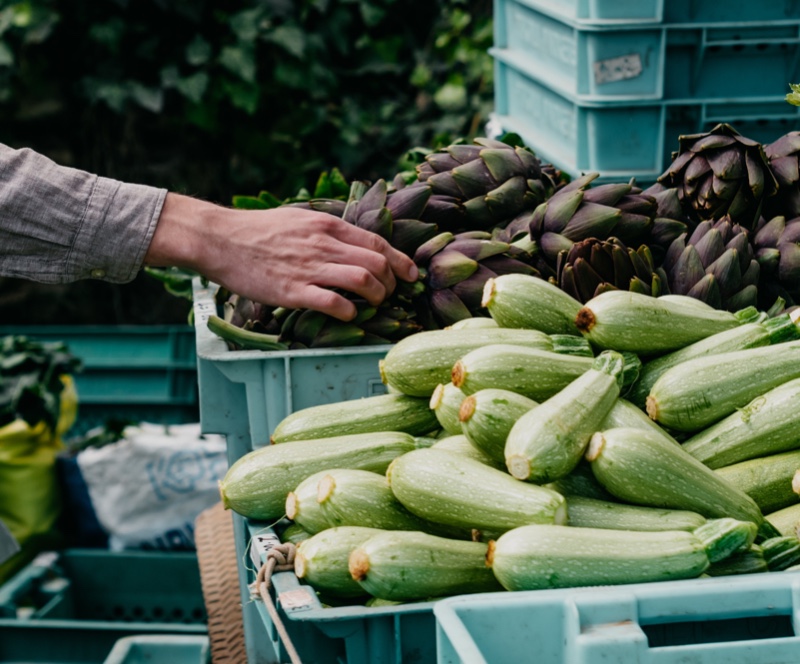
At Rumble, we love sourcing responsibly — and that means everything down to the products we use on our bodies as well as what we put inside them! Eating seasonally means consuming fruits and vegetables harvested during their peak growing season, typically locally and regionally. Sourcing responsibly, locally and seasonally means the food we consume is fresher, tastier and more nutritious — and we're helping the environment while we're at it.
Nutrient Density. Fresh produce harvested in season has a higher nutrient density than produce harvested out of season or shipped from far away. The longer produce sits on the shelf, the more nutrients it loses. Eating seasonally provides more vitamins, minerals and antioxidants to boost immunity, fight disease and reduce inflammation.
Variety. By eating with variety throughout the year we diversify our diet and ensure we get a wide range of essential nutrients — and avoid mealtime boredom.
Cost-Effective. In-season produce is abundant during its peak, so it's less expensive to grow and transport — a cost-effective way to add more fruit and veg to your diet.
Environmentally Friendly. Seasonal eating reduces the energy used to transport and store produce, supports local farmers, and reduces food waste.
Better Taste. Harvested at its peak, seasonal produce has better taste and texture — a more enjoyable eating experience that inspires us to eat more fruit and veg.
Our Annual Picks
What to look out for through the year:
More from the R2 Journal








Join our newsletter
Training tips, recipes and stories from the studios — straight to your inbox.