
Reformer vs mat Pilates, compared by a Dalston studio that runs both: equipment, class length, levels, cost and how to try each side by side.
Pilates comes in two main forms. Mat Pilates uses your body weight and a few small props on the floor, while Reformer Pilates puts you on a spring-loaded machine. Both are built on controlled movement and core work, and both welcome beginners, so choosing between them can feel like a coin toss.
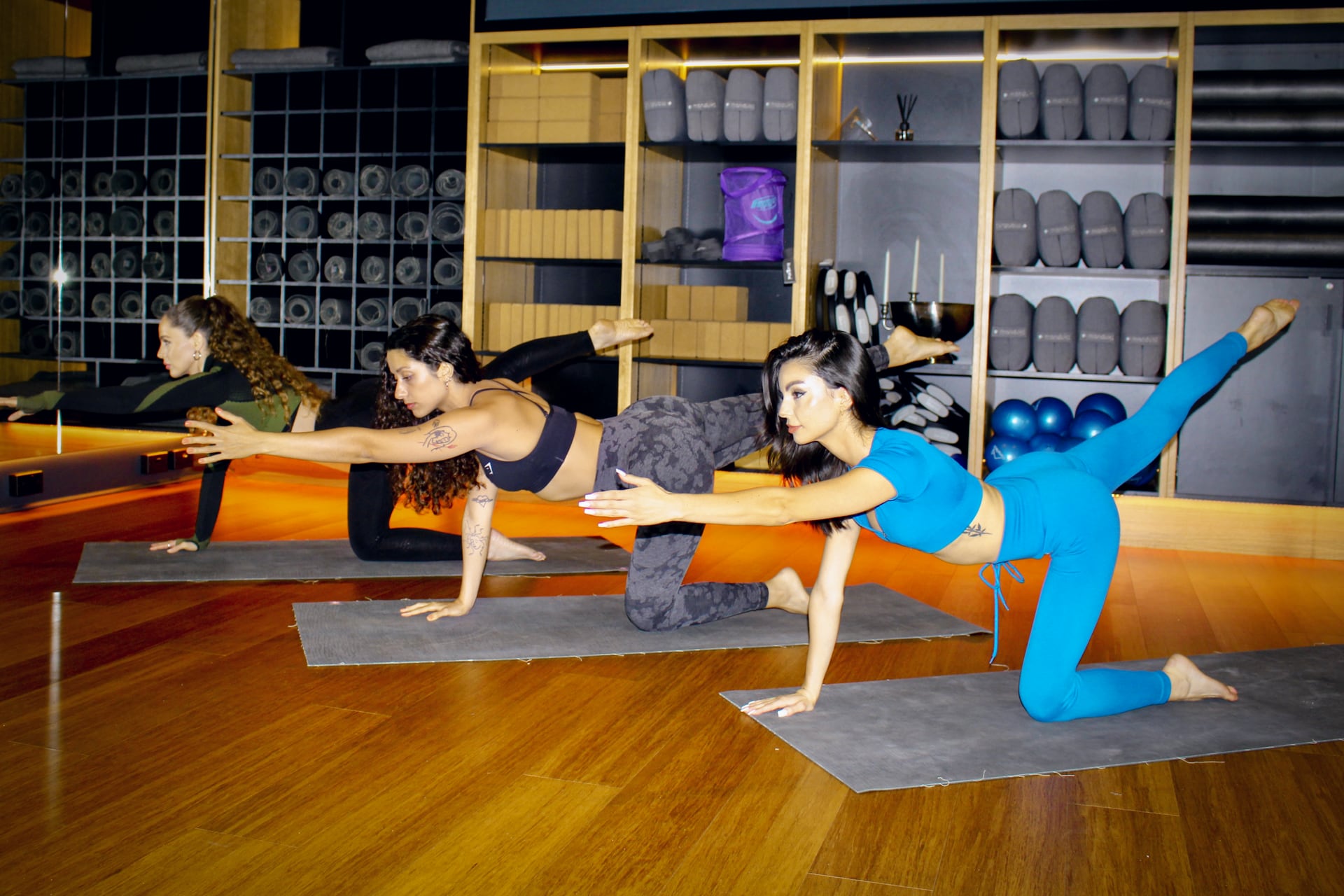
At Rumble Dalston we run both under one roof: Reformer Pilates in our Re.Former studio, and mat Pilates in the Mind & Body studio alongside yoga and barre. Here is how they compare, and how to try both in the same week.
Reformer vs mat Pilates: the short answer
Neither Reformer nor mat Pilates is better for everyone. The Reformer adds spring resistance and support through a sliding carriage, while mat Pilates relies on your own body weight and small props. Both are open to beginners at Rumble. The best choice is the one you’ll keep doing, so try both before you commit.
Here is the difference at a glance:
What a Reformer class involves
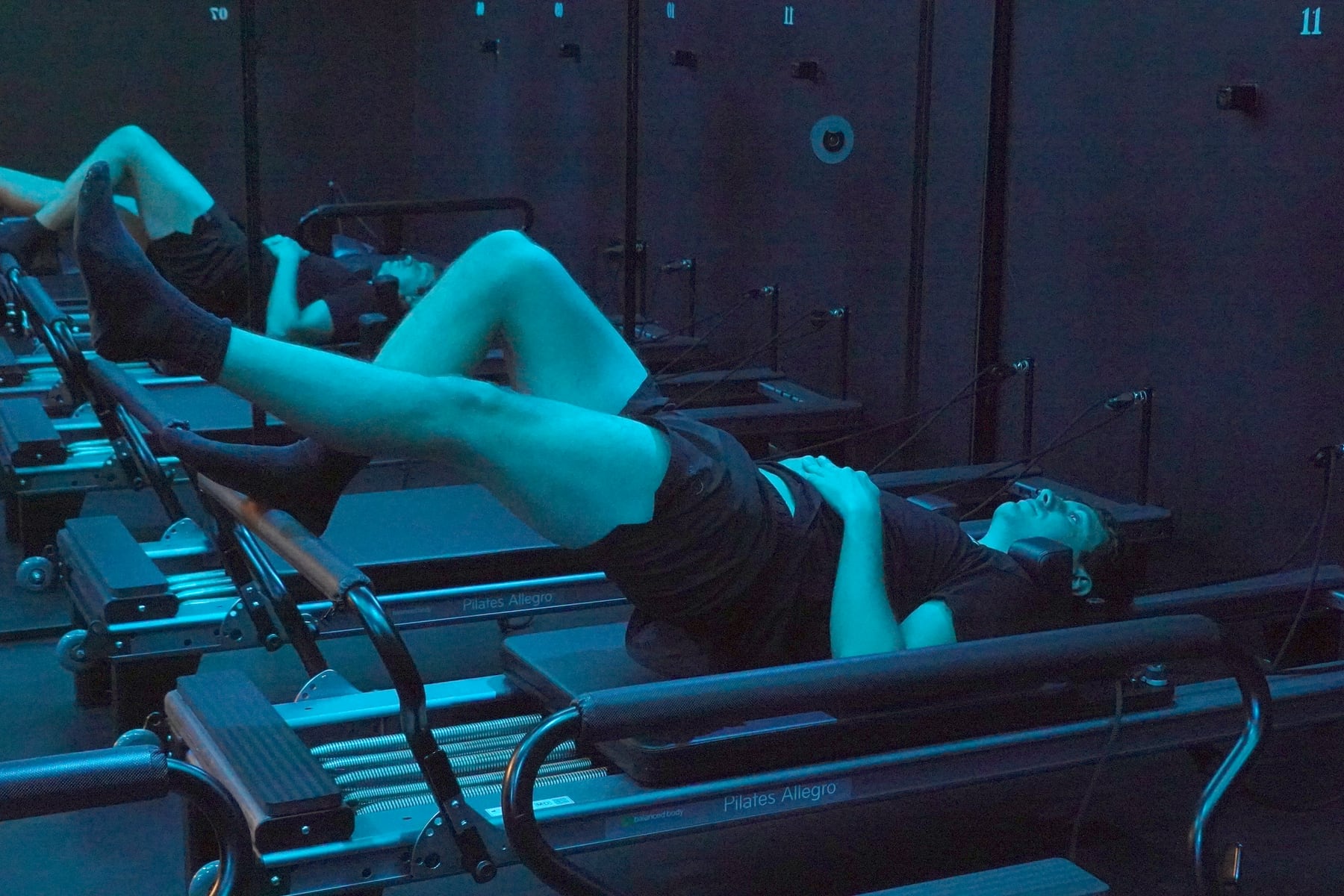
A reformer is a bed-like frame with a carriage that slides on wheels. Springs attached to the carriage set the load, straps give your hands or feet something to work against, and a foot bar lets you press away. Our studio uses Balanced Body Allegro reformers.
At Dalston, Reformer classes run every day. They’re 50 minutes long, with up to 8 people and one reformer each, and come in three types: Foundation, All-Level and Intermediate/Advanced. In All-Level classes, the coach offers easier and harder versions of the moves throughout, so you can work at the level that suits you.
New to the machine? Our Reformer beginner’s guide covers what happens in a first class. Class types and times are on our Reformer Pilates classes in London page.
What a mat Pilates class involves
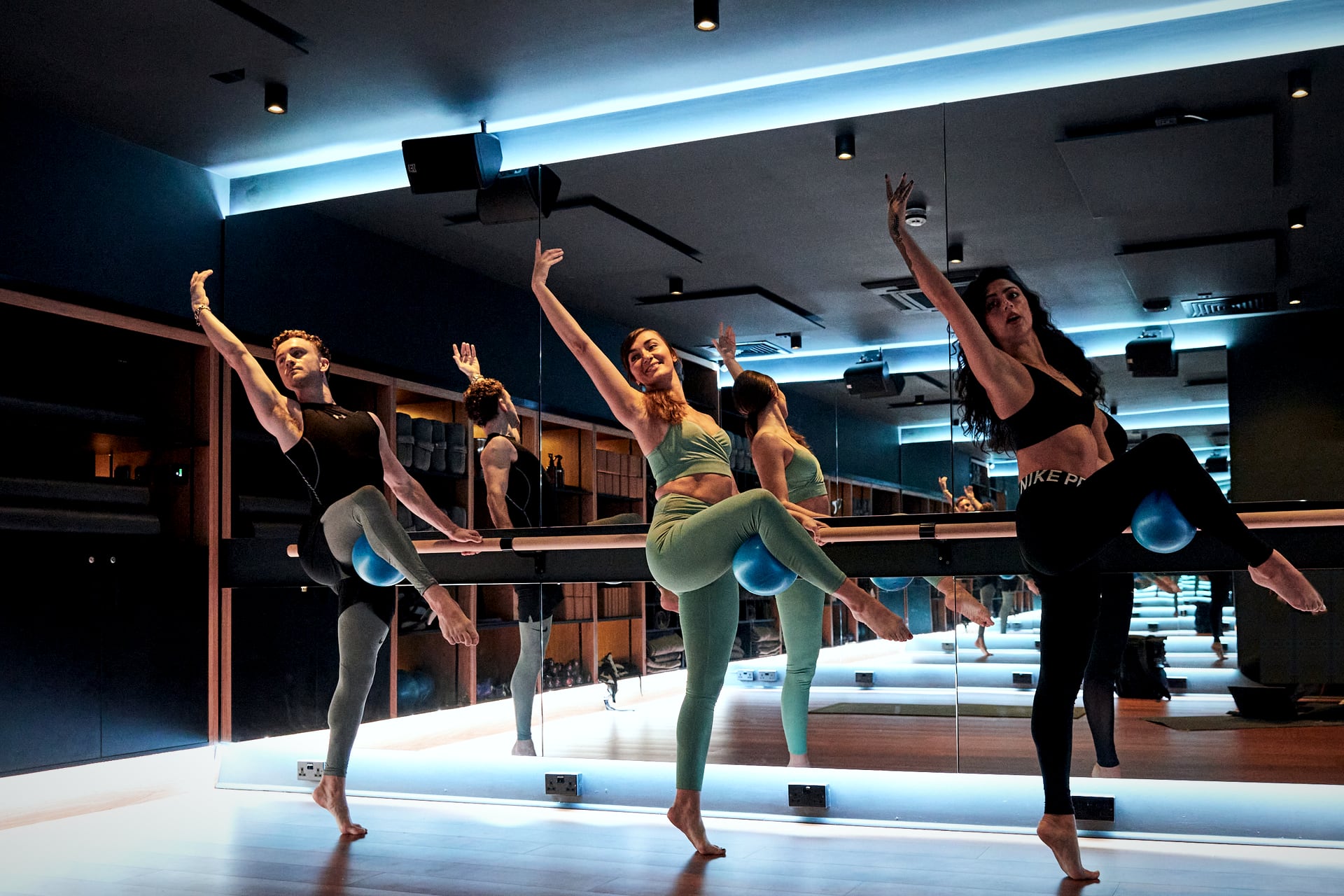
Our mat Pilates classes, listed on the timetable as Re.Center Pilates, are classical mat Pilates. The exercises are worked slowly on the floor, with the breath connected to each movement and the focus on the spine, core control and posture. Small props such as bands, balls and rings are used to challenge your stability.
Classes run 45 to 60 minutes in the Mind & Body studio and are open to all levels. As of November 2026 there are about six a week, spread across weekday evenings, a Friday morning and weekend mornings. Mats and props are provided, and our mat Pilates classes page lists the times alongside yoga.
The difference between Reformer and mat Pilates
Both formats are coached, built on controlled movement and focused on the core, so the differences are in how they load you and how the class runs:
- Resistance: the Reformer’s springs add load that can be set higher or lower. On the mat, the load is your own body weight, with props for extra challenge.
- Support: the springs can also assist a movement, so the carriage can make some exercises easier to control. On the mat, props can help, but you hold most positions yourself.
- Levels: three Reformer class types let you move up as you progress. Every mat class is open to all levels, so beginners and regulars share the same class.
- Practice at home: mat Pilates needs nothing more than a mat, so what you learn in class travels with you. Reformer work needs the machine.
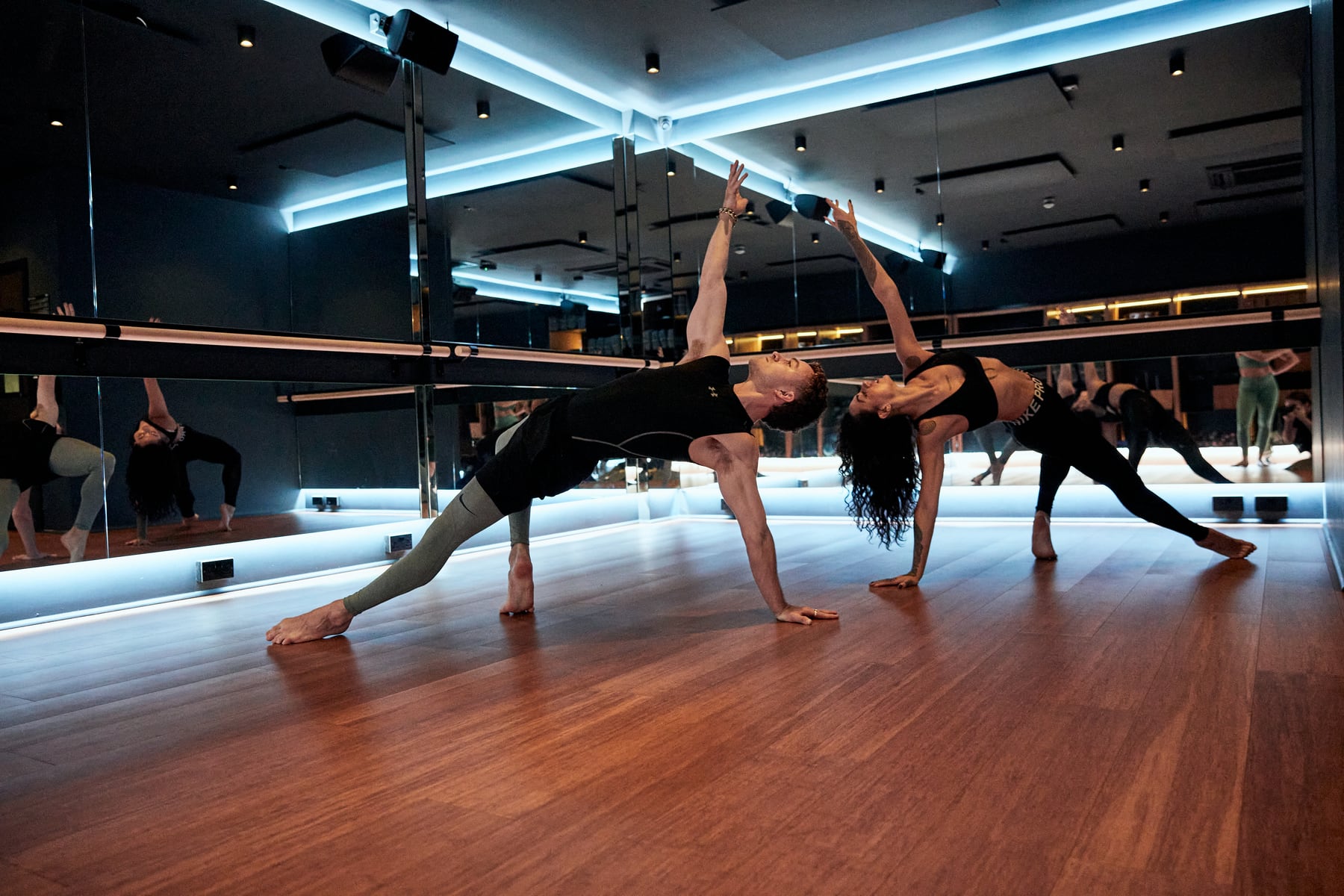
If barre is on your list too, our barre for beginners guide compares it with both, and our barre and sculpt classes share the Mind & Body studio with mat Pilates.
Reformer or mat Pilates: which is better for beginners?
Both are open to beginners, so start with whichever appeals. On the Reformer, a complete beginner can book a Foundation or an All-Level class. Foundation is designed for anyone new to the Reformer and introduces the carriage, the spring settings and the basic movement patterns. All-Level runs on more days, and the coach offers easier and harder versions of the moves throughout. Every mat Pilates class is open to all levels, so any slot works.
Coaches are told who is new before the class starts. Mention any injury when you arrive, so the trainer can adapt the exercises for you. If you’d rather learn the machine one-to-one first, our personal trainers can also coach you on the Reformers at Dalston.
Strength, flexibility and how often to go
The NHS physical activity guidelines for adults (page reviewed 22 May 2024) name Pilates and yoga among their examples of muscle-strengthening activities. They ask adults to do strengthening activities that work all the major muscle groups on at least 2 days a week, to the point where you need a short rest before repeating the activity. That comes alongside at least 150 minutes of moderate activity or 75 minutes of vigorous activity a week. The UK Chief Medical Officers’ physical activity guidelines (2019, updated in July 2026) set the same two-day minimum for strengthening.
So a Pilates class, on the Reformer or the mat, can count towards those two days when it works all the major muscle groups to the point of needing that short rest. Neither format is a shortcut, and two classes a week is a realistic place to start.
If flexibility is your main goal, the Mind & Body studio also runs a 45-minute Mobility + Flexibility class, open to all levels, once a week as of November 2026. Our article on flexibility and mobility explains how flexibility differs from mobility.
Where yoga fits alongside Pilates
Re.Center yoga runs in the same Mind & Body studio, in classes of 45 to 60 minutes, about four times a week as of November 2026. The yoga classes are faster-paced vinyasa flows through standing poses, forward bends, backbends and twists, while mat Pilates works through controlled exercises, mostly on the floor, with small props.
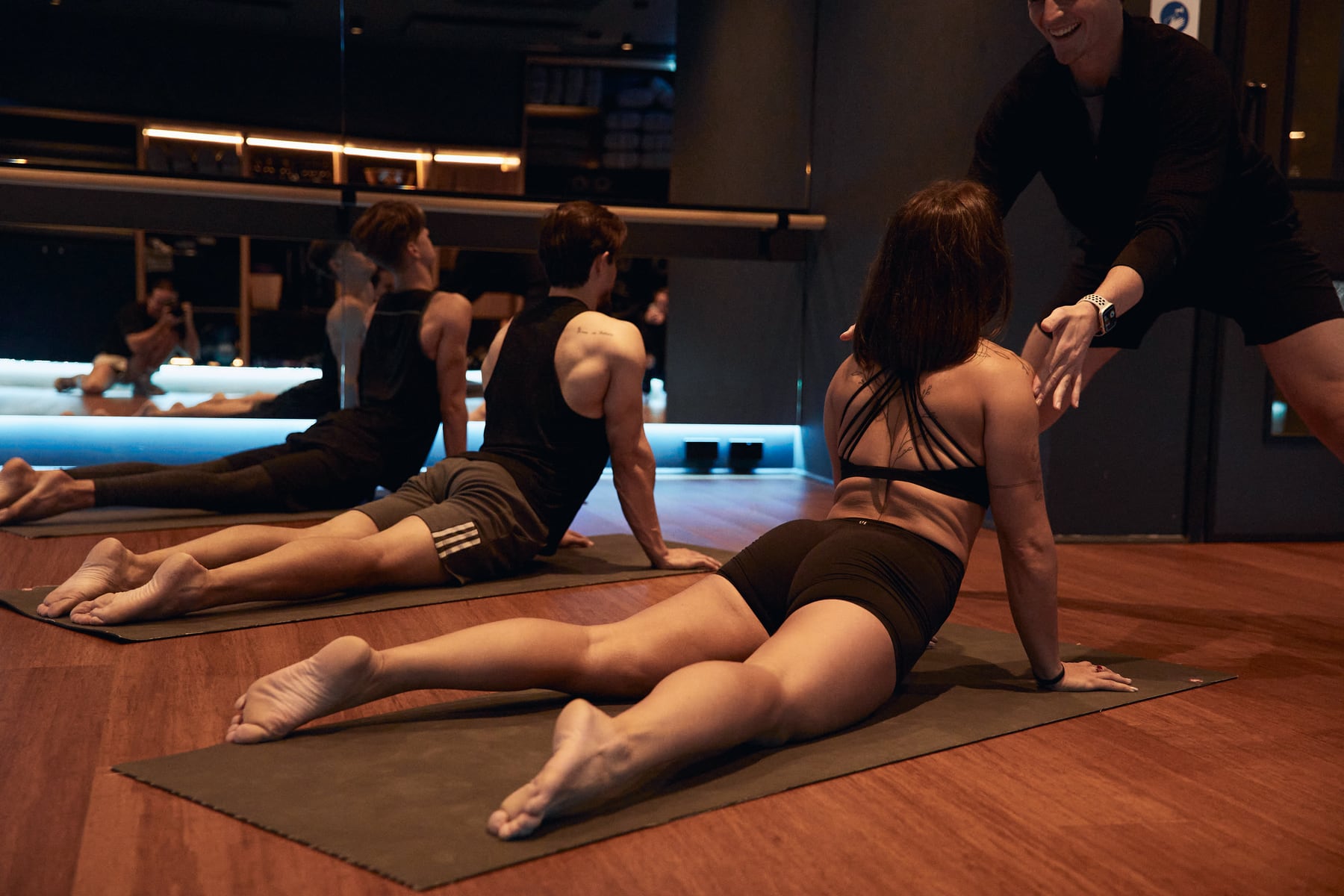
Plenty of people do both. One membership choice covers them: pick the Mind & Body studio as your specialty studio and it includes yoga, mat Pilates and the Re.Sculpt barre, full-body and core classes. The plans are set out below.
Doing both in one week
You don’t have to pick one for good. Two simple weekly patterns work well:
- Reformer plus mat: one class of each a week. Mat Pilates has fewer classes, so book your mat class first and fit the Reformer around it.
- Pilates plus the circuit: one or two Pilates classes alongside the 40-minute Re.HIIT circuit, where a class starts every 10 minutes at both our studios.
Getting unlimited Reformer, mat Pilates or both (as of November 2026)
New to Rumble? Start with the Discover offer, which is three classes of your choice for £45, for new clients only, booked within one month of purchase, at either studio. You could book one Reformer class, one mat Pilates class and one yoga class and compare them. After that, unlimited monthly memberships start from £49, though that plan is the Off-Peak circuit membership at Fitzrovia and doesn’t include Pilates. These are the options that do:
If you want both formats every week, All Unlimited is the plan that covers them. If one format wins, the £159 plan with that studio is the lower-cost route. It’s the same price whichever studio you pick, so unlimited Reformer costs no more than unlimited mat Pilates. Every option is on the memberships page.
What to bring and what to know before you go
Book on our website or in the Rumble app, and come 10 minutes early, because latecomers can’t join a class once it has begun. Say it’s your first time, and mention any injury to the trainer when you arrive.
For the Reformer, grip socks are required. Bring your own or buy a pair at reception. For mat Pilates, mats and props are provided. Towels, lockers and showers are available, and Dalston has water fountains.
If you’re pregnant, speak to your doctor before you book. Reformer and mat Pilates classes both ask for a note from your doctor, and our FAQ has the details. The minimum age is 16, and 16 and 17 year olds need written consent from a parent or guardian, as set out in our terms and conditions.
Reformer vs mat Pilates: quick answers
Book your first class
Ready to compare? New clients can use the £45 Discover offer for three classes, booked within one month of purchase. Book at Dalston, choose a Foundation or All-Level Reformer class and a mat Pilates class in the same week, and keep the third for whichever you liked best.
Want to check times first? The Reformer Pilates and mat Pilates and yoga timetables are on the class pages. Rumble Dalston is on the ground floor of Labyrinth Tower, Dalston Square, E8 3GP, two minutes on foot from Dalston Junction.
More from the R2 Journal

Join our newsletter
Training tips, recipes and stories from the studios — straight to your inbox.