
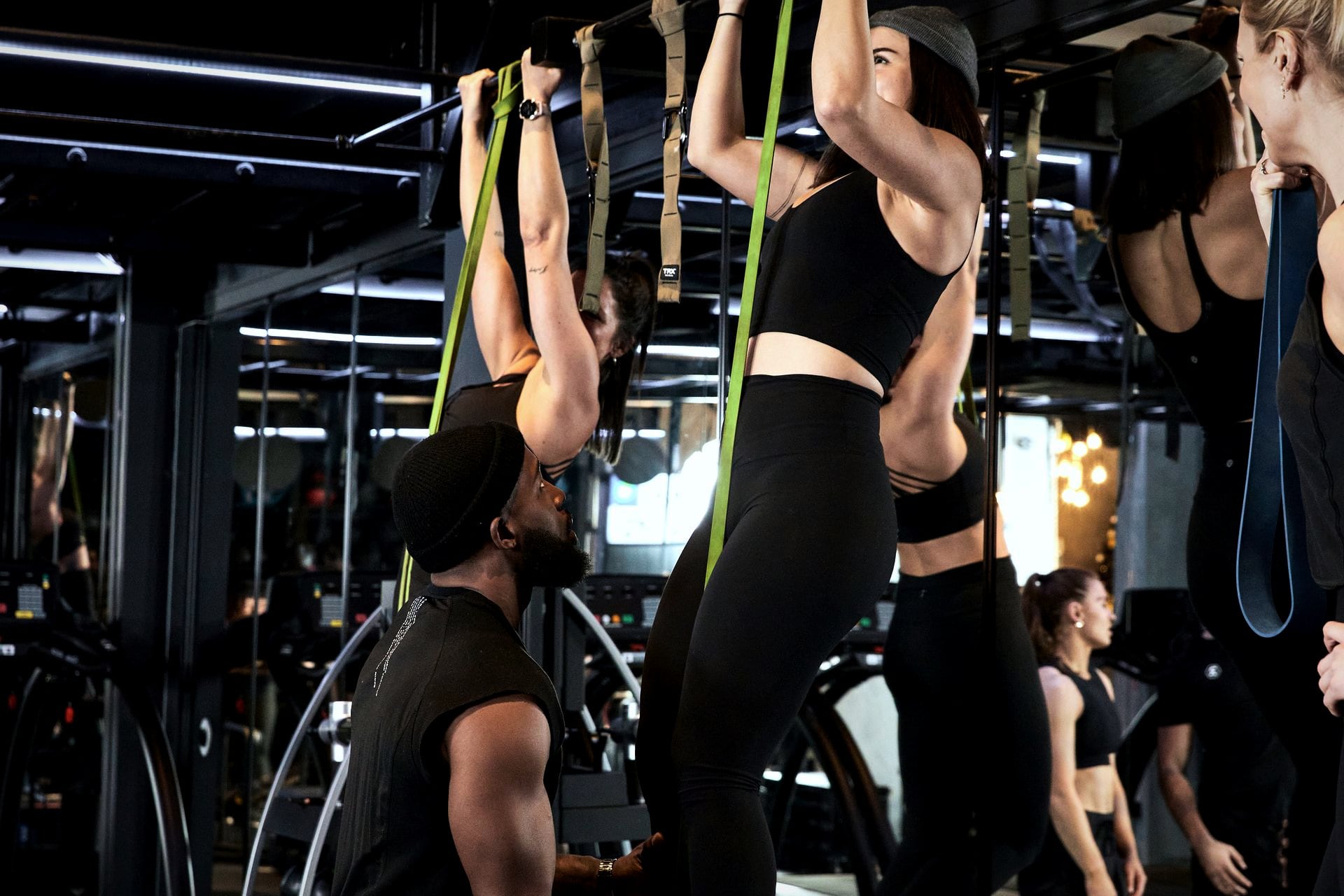
Personal trainer cost in London runs from about £40 to over £100 a session. What drives it, why Rumble PT is under £70 on a 10-pack, and when a class wins.
It’s the first question almost everyone asks before they book a personal trainer, and the honest answer is a range. The number on the price list is only half of it, too: what a session includes, how long it lasts and what you have to pay on top all change what an hour of coaching really costs you.
This guide gives you the London price ranges, explains why one trainer charges £40 and another well over £100, and shows where personal training at Rumble sits: under £70 a session on a 10-pack, at both our Dalston and Fitzrovia studios. It also covers the question most price guides skip, which is when a coached class is the smarter way to spend the money.
Personal trainer cost in London: the typical range
Two published price guides give a fair picture. Bark’s figures are for London; Gym Guide’s are UK-wide, and it says London runs higher. These are the figures as we checked them in September 2026:
Treat those as ranges rather than quotes, because they blend very different services, from a 30-minute session on a busy gym floor to a private studio hour with a specialist. So yes, cheaper personal training exists in London, and we would rather say so up front. The rest of this guide is about what the extra money buys, and how to compare one trainer’s price with another’s fairly.
Why one trainer charges £40 and another over £100
The headline rate hides most of what you are actually buying. When you compare personal trainers, compare these:
- The membership on top: many gym-floor trainers can only train you inside a gym you are a member of, so the real cost of a session is their fee plus a monthly membership. Rumble personal training needs no membership and has no studio fee, so the session price is the whole price.
- Session length: a “session” can mean 30, 45 or 60 minutes. Divide the price by the minutes you get, not by the booking.
- Experience and specialism: a coach who can plan around a race, a Reformer goal or a return from injury charges more than a generalist, and is usually worth it if that is what you need.
- Where you train: Gym Guide puts private PT rooms at £50–£100 or more, above both commercial gyms and independent studios, and a studio built for coaching is a different hour from a corner of a crowded gym floor.
- Packs and blocks: many trainers discount for commitment. If you plan to train regularly, the per-session price on a 10-pack is a fairer comparison than the single-session rate.
The takeaway is simple. Compare the all-in cost of one coached hour, not the sticker price. It’s the same logic as working out the cost per workout you’ll actually do before you sign up for a gym membership.
What personal training costs at Rumble: under £70 a session on a 10-pack
Here is our personal training price list, as of September 2026, and what sits behind each line:
The first hour starts with an assessment of how you move, how fit you are now and what you want from training, so the plan is built around you from day one. From there it progresses, with your coach tracking your results from one session to the next.
At either studio, sessions can use the weights and the functional training floor. At Rumble Dalston in East London they can also use the Woodway treadmills and the Reformers, which matters if your goal is a faster 10k or confident Reformer work.
So where does that sit? At £79, a single session is above Bark’s typical London band and near the top of Gym Guide’s UK-wide range for independent studios, though the guide notes that London prices tend to run higher. On the 10-pack, each full hour comes in under £70, at the top of Bark’s London band, with no membership on top. You can meet Rumble’s personal trainers before you choose.
Under £70 a session on a 10-pack, for a full hour one-to-one, with no membership on top.
How many PT sessions do you need?
There is no magic number, because it depends on what you want from personal training. Three patterns work well for most people:
One session to get a plan. A technique check and a programme you then run on your own. Our single session is priced for exactly that first step.
A block to build the habit. Ten sessions, once or twice a week, gives you time to learn the main lifts properly, see your progress tracked and build training into your routine. With no expiry on the pack, you set the rhythm.
Check-ins between classes. Once the basics are solid, you can drop to a session every few weeks to update the plan, and do the rest of your training in classes.
Whichever you choose, the NHS baseline for adults is a useful yardstick: at least 150 minutes of moderate activity or 75 minutes of vigorous activity a week, plus strengthening activities on at least two days, according to the NHS physical activity guidelines. A block of personal training teaches you to make those strength days count, and setting a goal your coach can plan around is what makes them stick.
Is a personal trainer worth it? Five signs it is
Personal training is worth the money when it changes something you couldn’t change on your own. These are the five clearest signs:
- You’re new to strength training: learning squats, hinges and presses properly from day one is faster than unlearning bad habits later.
- You’re coming back: after a long break or an injury, with your GP or physio’s go-ahead, a coach builds you back up at the right pace.
- You have a date: a first 10k, a race or an event needs a plan that works backwards from the day, including the strength work most runners skip.
- You’ve hit a plateau: the same weights and the same times for months usually mean the plan needs changing, and a fresh pair of eyes is the quickest way to change it.
- You don’t turn up for yourself: a booked session with a coach who is expecting you is one of the hardest appointments to skip.
There is an honest counterpoint, though. If you already train consistently and mainly want to keep fit, you don’t need a coach to yourself every session, and that is where the circuit comes in.
When PT is too expensive: the circuit is pretty much PT on demand
If personal training every week doesn’t fit the budget, the Re.HIIT circuit is the next best thing, and for a lot of people it is the smarter buy. It is a coached 40-minute circuit that starts every 10 minutes, all day, at both studios, and it works much more like on-demand personal training than a typical group class:
A new programme every day. The circuit changes daily, rotating Build days for strength with Burn days for endurance, so the programming is done for you and never goes stale.
A trainer on the floor, adapting to you. The screens demonstrate every exercise, so the coaches spend the session moving between stations, fixing a squat that is drifting, handing you a heavier or lighter weight or swapping in an easier or harder version of a move. That’s how the same daily programme fits a first-timer and a regular alike.
A fraction of the price. Re.HIIT Unlimited is £119 a month at both studios, and three circuits a week works out at under £10 a session. At Fitzrovia the Off-Peak plan is £49 a month in the quieter hours, when the coach has even more time for each person, and twice a week is under £6 a session.
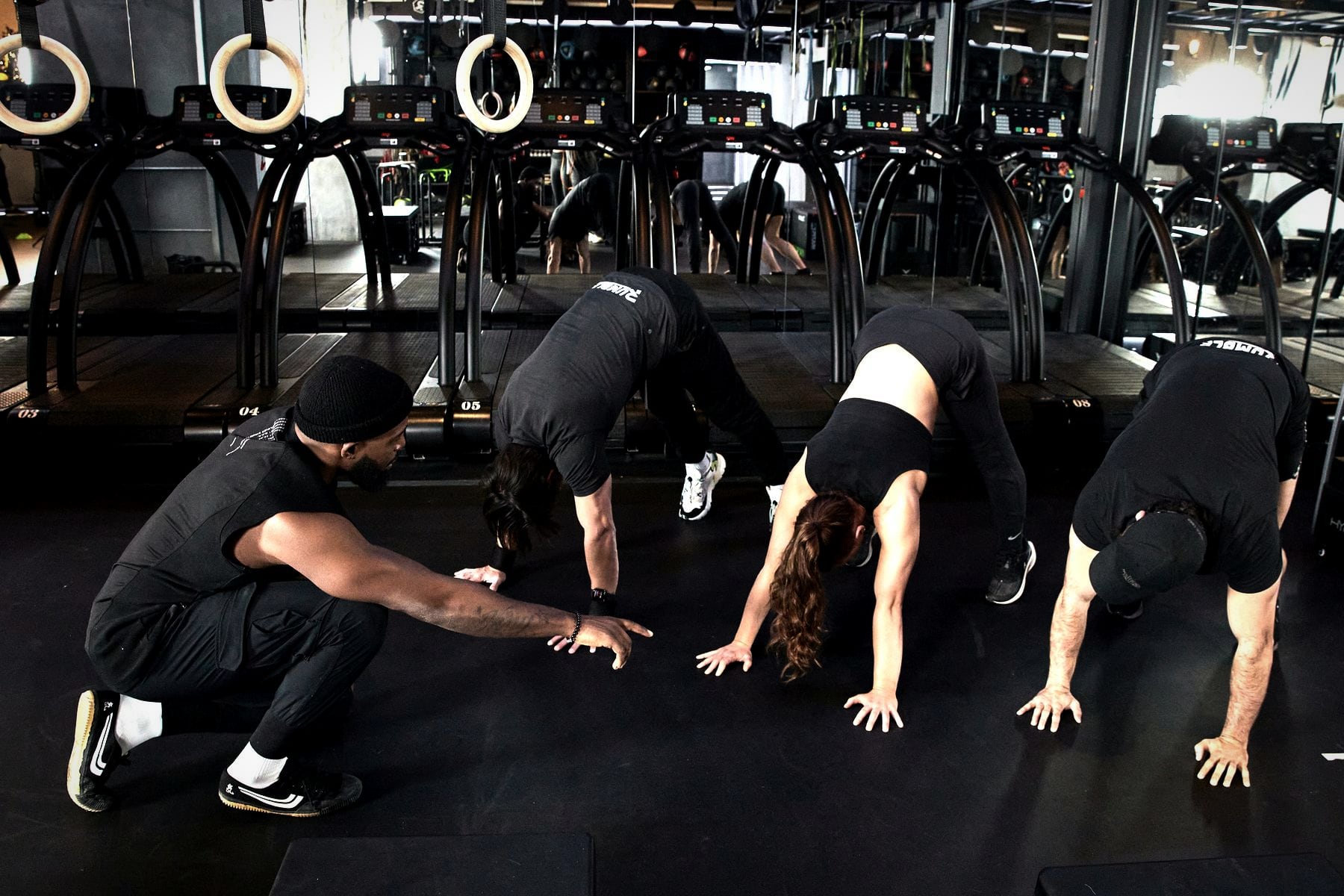
We’ve written more about those quieter hours, and who they suit, in our guide to training off-peak in London.
Personal trainer vs group classes: which do you need?
Side by side, this is how personal training and the circuit compare at Rumble, with prices as of September 2026:
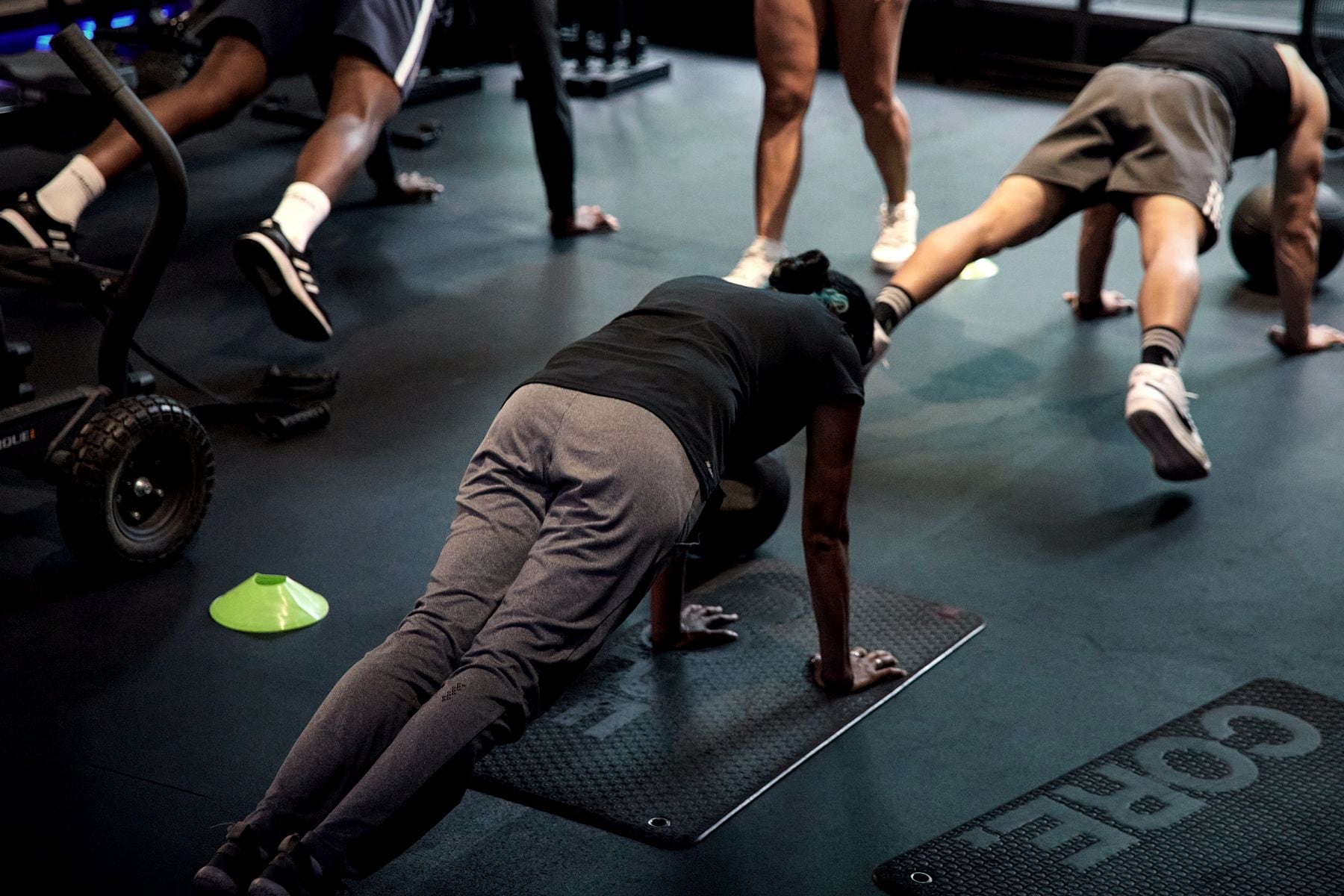
The smartest plan usually combines the two. Start with a block of personal training to learn the movements and set your goals, let the circuit carry your weekly training, and book a check-in every few weeks to update the plan. Or start in the circuit and book a session whenever you want a closer look at your technique. Either way, you pay for one-to-one time only where it counts.
What to ask a London personal trainer before you pay
Wherever you train, these questions separate a good coach from an expensive one:
- Qualifications: in the UK a Level 3 personal training qualification is the standard, so ask which qualifications they hold and whether they are insured.
- The first session: will there be an assessment of your fitness, movement and goals, or does it go straight into a workout?
- Progress: how will they measure it, and how often will your plan change as you improve?
- The all-in price: how long is a session, do you need a gym membership on top, and do packs expire?
- Your goal: have they coached it before, whether that is running, Reformer or coming back from an injury?
For the record, here are our answers on format and price. Every Rumble personal training session is 60 minutes and one-to-one, the first includes an assessment, you don’t need a membership, there’s no studio fee, and the 10-pack doesn’t expire. Our coaches are qualified, and you can browse the coaches first to find the right fit.
Quick answers: personal trainer cost in London
Getting started at Rumble Dalston or Fitzrovia
Personal training runs at both of our studios. Rumble Dalston is at Ground Floor, Labyrinth Tower, Dalston Square, E8 3GP, two minutes from Dalston Junction Overground. Rumble Fitzrovia is at 101-105 New Cavendish Street, W1W 6XH, eight minutes from Great Portland Street and Goodge Street and around ten from Warren Street and Oxford Circus.
Our prices as of September 2026 are below, and the full price list always has the current figures:
The easiest first step is a free consultation: tell us your goal and the studio that suits you, and a coach will call or email you to arrange it. Rather try the circuit first? If you’re new to Rumble, book a class with the Discover offer and see how much coaching a Rumble class really gives you.
More from the R2 Journal

Join our newsletter
Training tips, recipes and stories from the studios — straight to your inbox.