
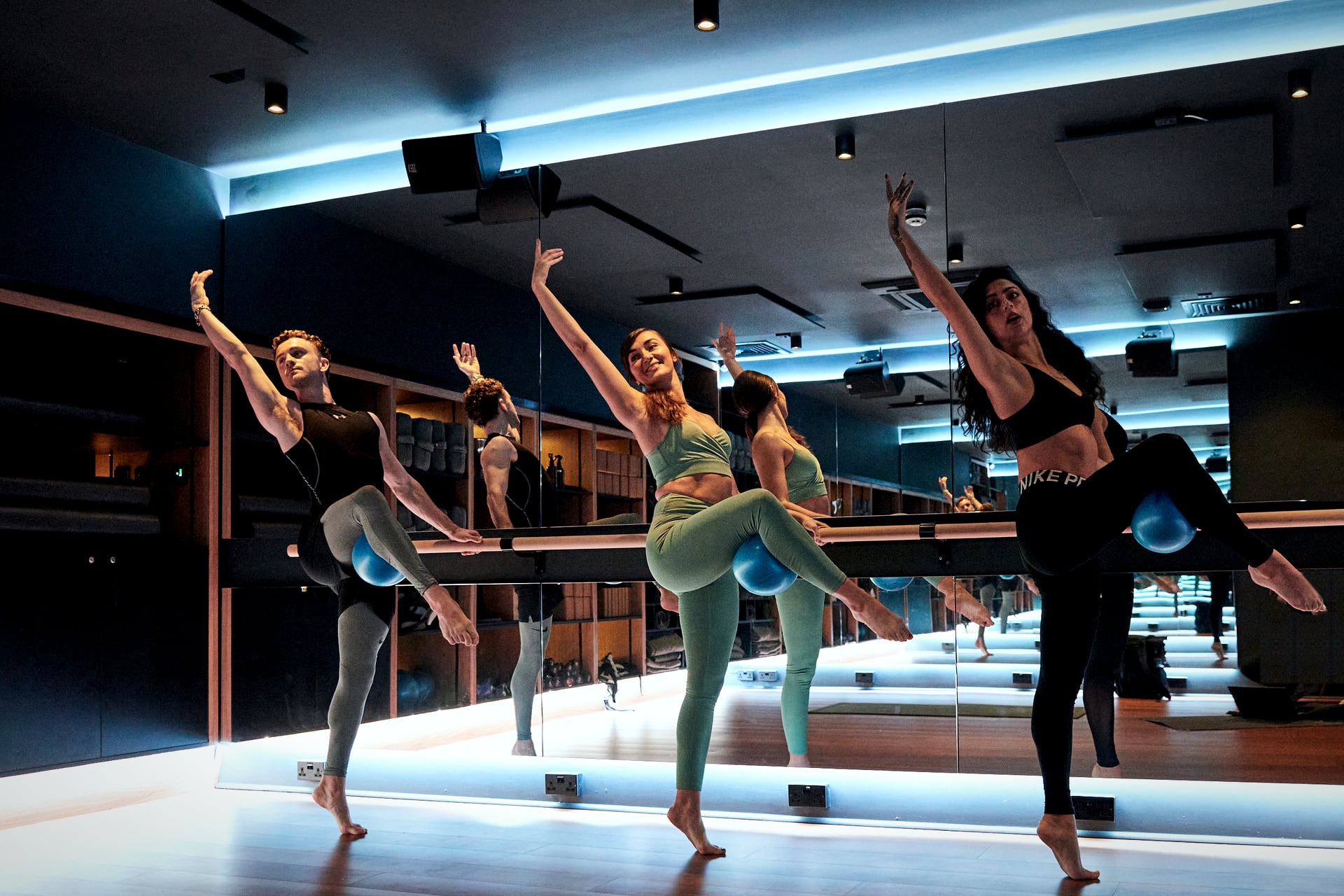
Barre for beginners in London, explained. What barre is, what a 45-minute class at Rumble Dalston involves, barre vs Pilates and how to start.
Barre puts a lot of people off before they try it. It borrows from ballet, so they assume it’s for dancers, or for people who are already fit and flexible. In fact it’s open to complete beginners, and this guide is written for your first class.
It covers what barre is, what happens on a first visit, how our three classes differ, how barre compares with Pilates and what it costs to try. It’s based on our own barre classes in London, which run at Rumble Dalston.
What is barre?
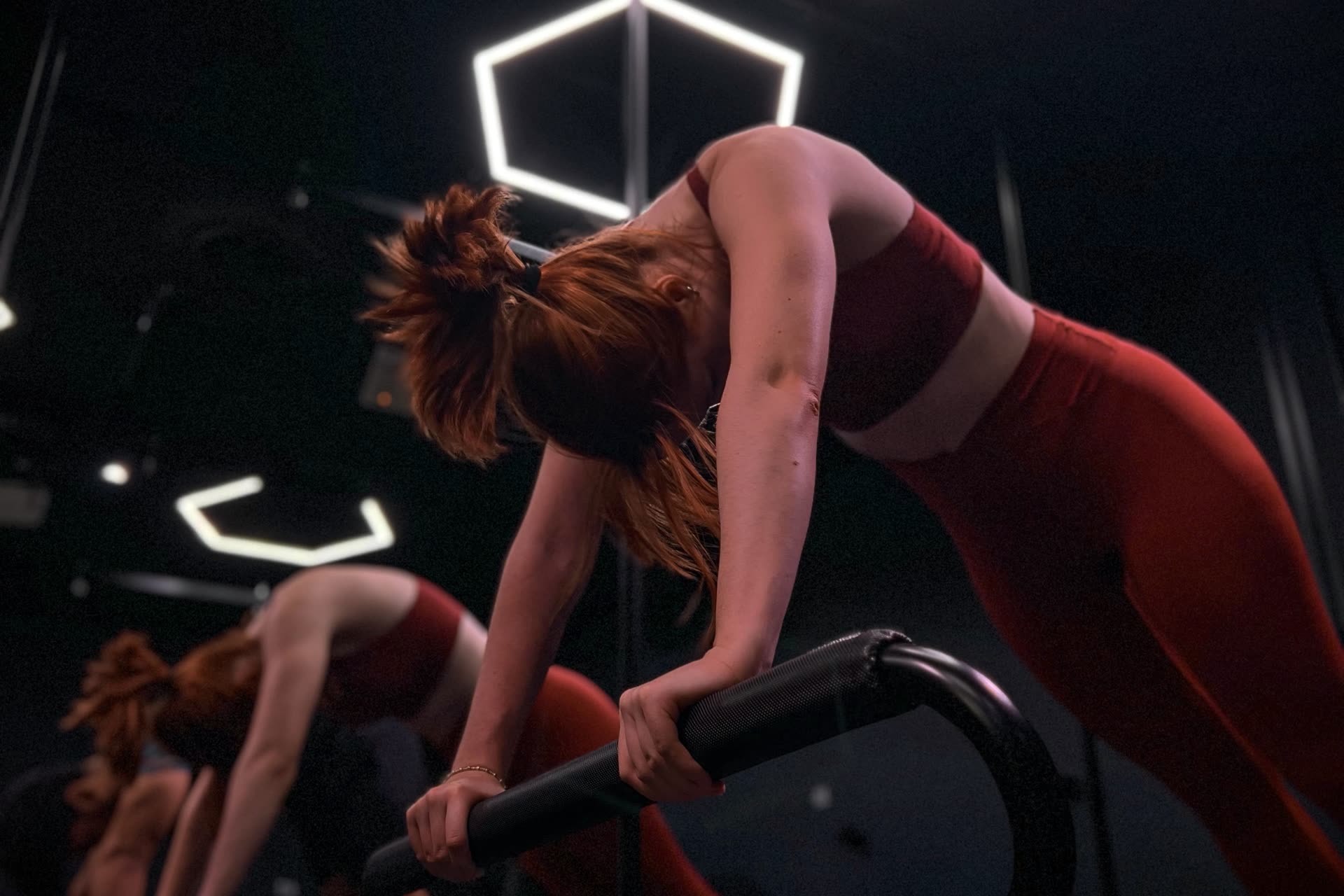
Barre is a low-impact workout built on ballet-inspired movements. You work at a fixed handrail, the barre, through small, controlled movements, short pulses and positions held still. It is a fitness class, not a dance class, and you need no dance experience to start.
At Rumble, barre belongs to Re.Sculpt, a group of three classes at our Dalston studio. The Barre class is the one worked at the barre, and it’s the one this guide follows. Full Body and Core are the other two, and all three are compared further down.
Is barre good for beginners?
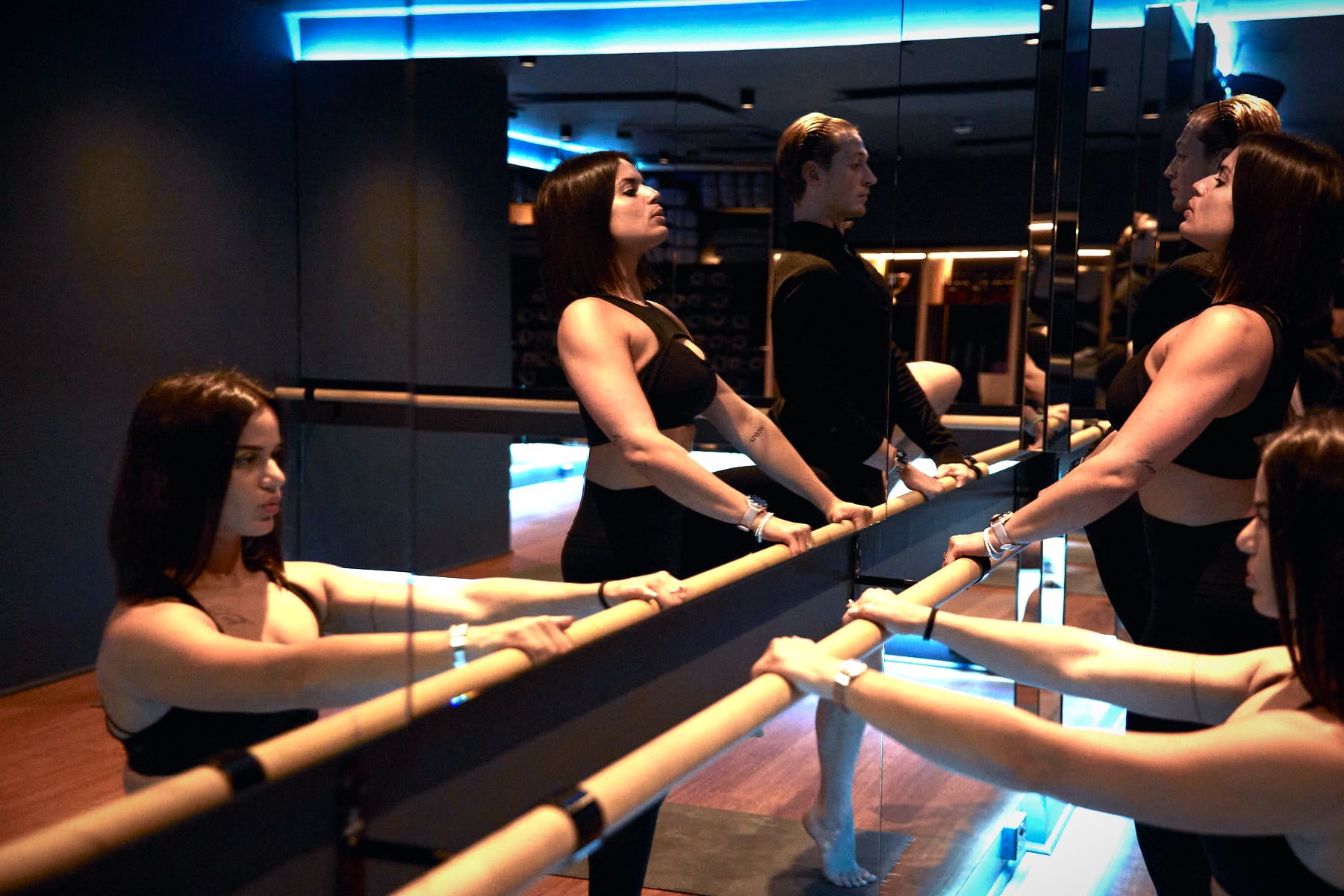
Yes. All three Re.Sculpt classes are low impact and suitable for all levels. Two worries tend to hold people back. The first is never having danced. It doesn’t matter, because every class is coached the whole way through. The second is not feeling fit or flexible enough yet. You don’t need to be, and coaches are told who is new before the class starts.
Low impact is not low effort.
The classes are low impact and high intensity. The movements are small and controlled, but repeating them in pulses and holding positions still is hard work. One member’s review on our class page calls the class “challenging but rewarding”.
If you haven’t exercised for some time, or you have a medical condition or concerns, the NHS advises speaking to your GP first, in its physical activity guidelines for adults (page reviewed 22 May 2024). Pregnancy is covered in the quick answers below.
Barre for beginners in London: your first class
Here’s what to expect from your first Barre class at Rumble Dalston, step by step:
Four of the terms above are worth knowing before you go:
- Plié: a bend of the knees.
- Arabesque: standing on one leg with the other extended behind you.
- Pulse: a very small movement, repeated.
- Isometric hold: holding a position still while the muscles keep working.
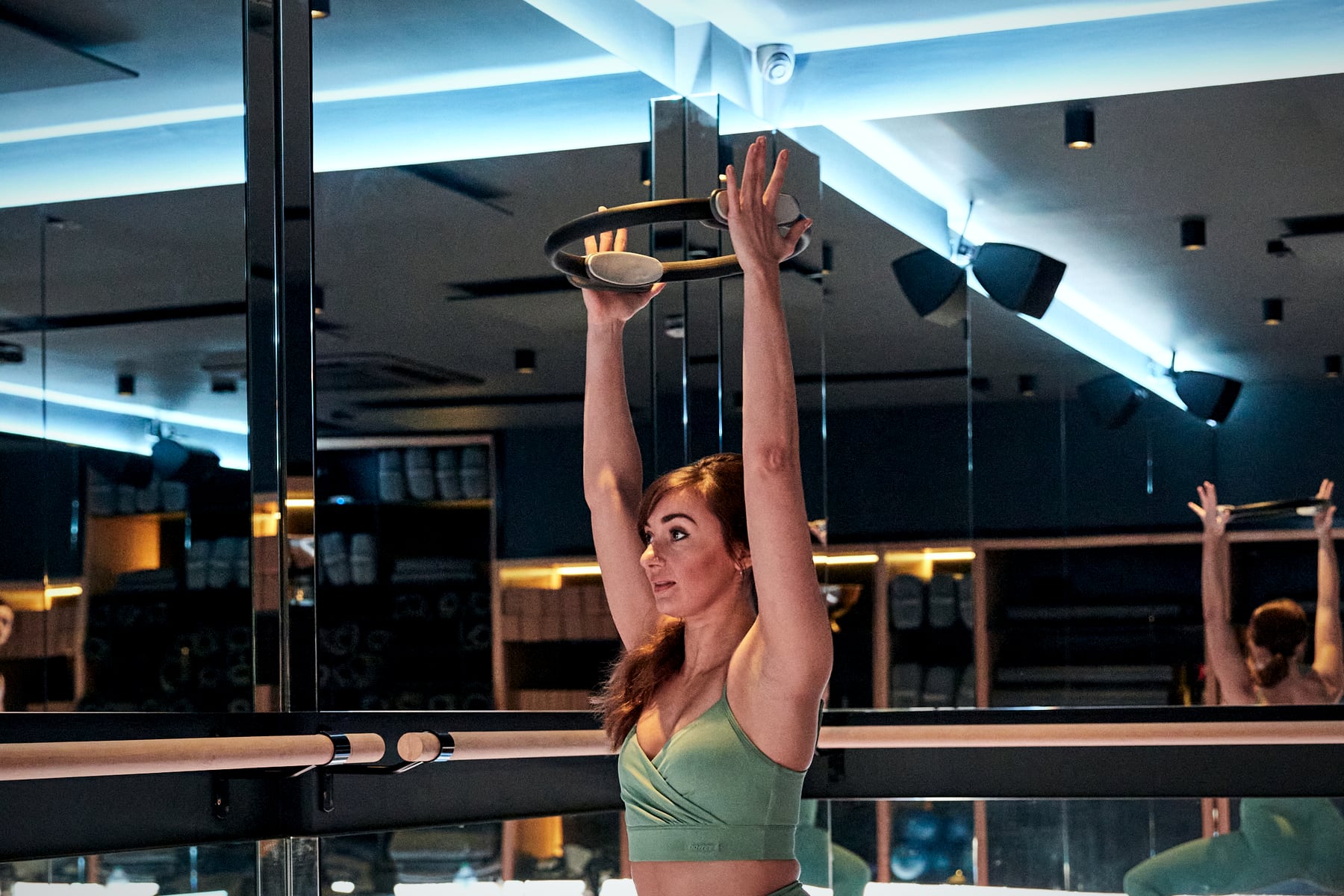
Dalston is in Hackney, East London, and all our Re.Sculpt classes in Dalston are held here. Rumble Dalston has a 4.9 rating on Google from 123 reviews and 4.8 on ClassPass from 30,000+ ratings, as of October 2026.
Barre, Full Body or Core: the three formats
Barre, Full Body and Core each have their own focus. Here’s what each one works:
Each class is 45 minutes. All three work for a complete beginner, so there is no order to follow. Start with whichever appeals, then try the other two.
What barre trains, and how often to do it
Two sessions a week is a sound rhythm for a beginner. One Barre and one Full Body is a simple way to set that up.
The NHS guidelines ask adults to do strengthening activities that work all the major muscle groups, which they list as the legs, hips, back, abdomen, chest, shoulders and arms, on at least 2 days a week. They add that strength exercises should be done to the point where you need a short rest before repeating the activity. The UK Chief Medical Officers’ physical activity guidelines (2019, updated in July 2026) ask for the same minimum of two days a week, and note that “any strengthening activity is better than none”.
Neither names barre. A barre session can count towards those two days when it works all the major muscle groups hard enough that you need that short rest. Our Barre class concentrates on the glutes, thighs, arms and core, so other classes cover more of the list. Core adds the lower back, and Re.Run Upper Body works the chest, back, shoulders and arms.
The guidelines also ask for aerobic activity alongside the strengthening work, and our strength training guide for women goes through them in more detail.
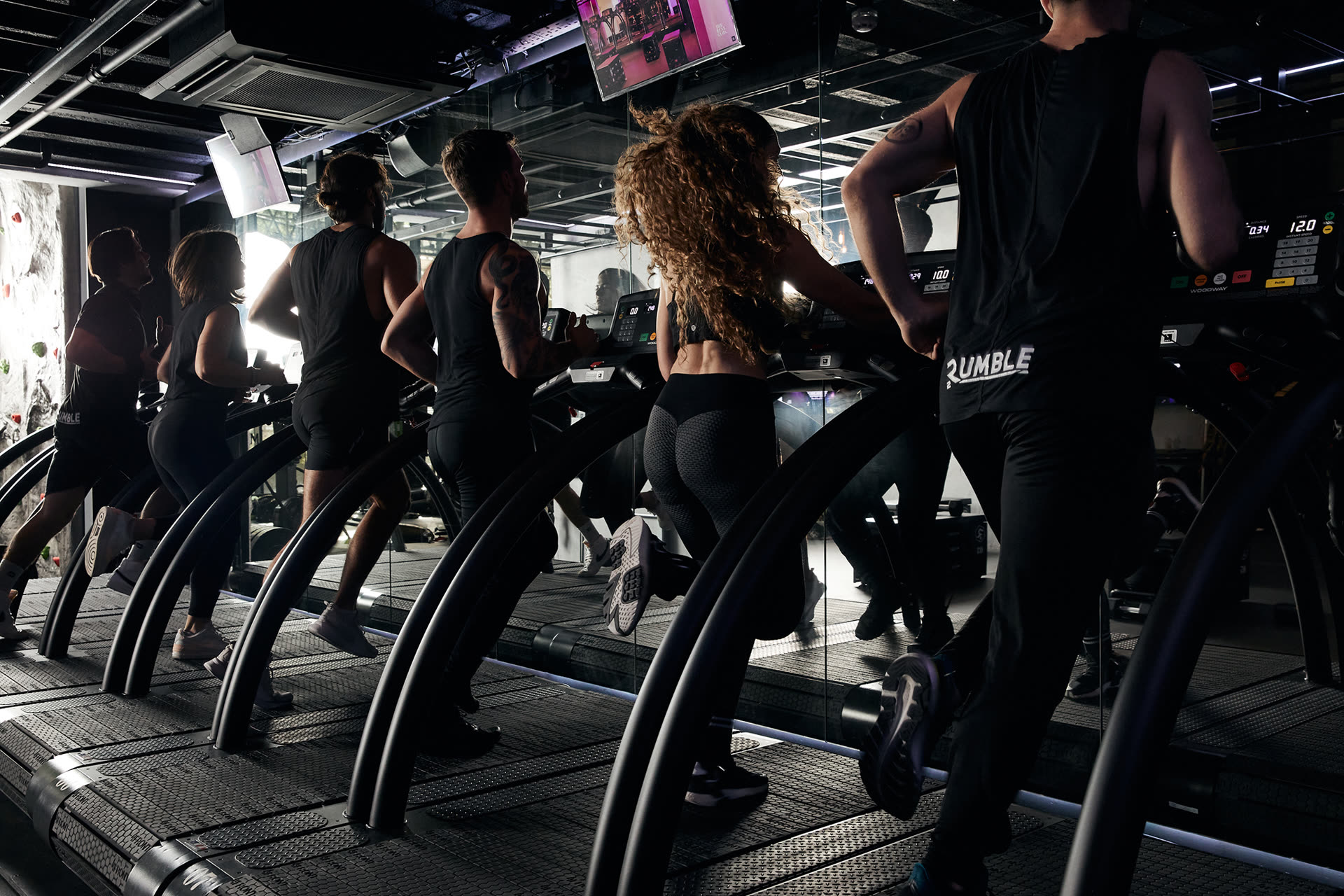
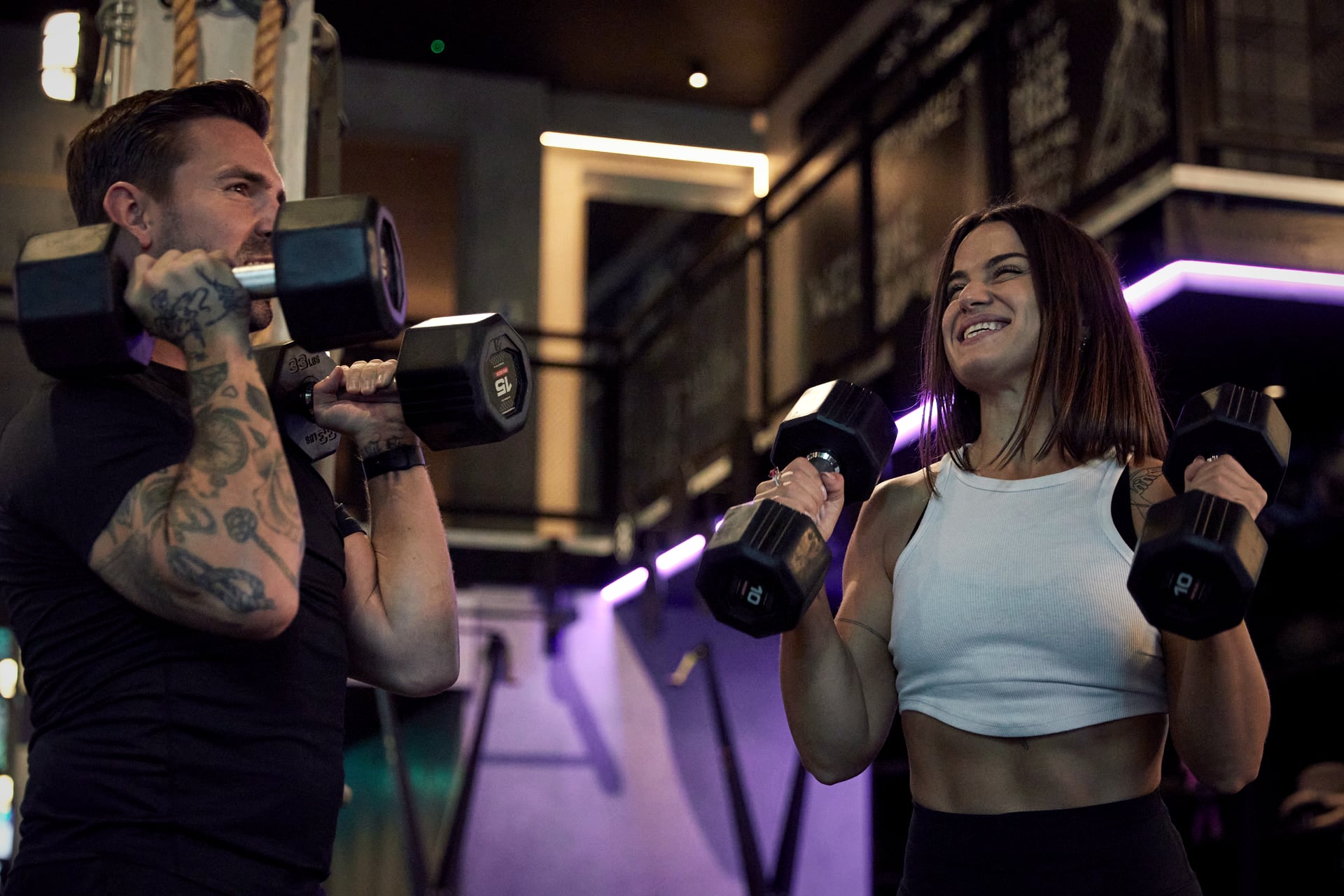
If you want heavier strength work as well, Dalston has three options. Re.Run Upper and Lower Body pair treadmill intervals with strength work on Fitbench stations; the Build days of the Re.HIIT circuit put the emphasis on strength; and, to an extent, Reformer Pilates builds strength too. The circuit has a new programme every day, screens that demonstrate every move, including the warm-up, and a trainer adapting each station to you, which makes it pretty much PT on demand for a fraction of the price.
Barre vs Pilates: mat and reformer compared
Barre and Pilates are often compared, and at Rumble Dalston you can do both. Here is how barre, mat Pilates and Reformer Pilates differ in what you do and what you use:
All three are coached and built on controlled movement. Barre and mat Pilates share the Mind & Body studio, and the Reformer has a studio of its own. Choose by the class you’ll enjoy and keep up, and if you can’t decide between barre and Pilates, Full Body has some of each. If the Reformer is the one you want to try, our reformer beginner’s guide covers a first class.
What it costs to try barre at Rumble (as of October 2026)
The Discover offer is three classes for £45 (new clients only), and unlimited monthly memberships start from £49. That £49 plan is the Off-Peak circuit membership at Fitzrovia and does not include barre. These are the options that do:
If you’re new, start with the Discover offer. Because its three classes can be any mix, you could try Barre, mat Pilates and Reformer side by side before you decide. You can see when our barre, sculpt and core classes in London run, and every option is on the memberships page.
Barre for beginners in London: quick answers
Book your first class
New to Rumble? The Discover offer is three classes of your choice for £45, for new clients only, booked within one month of purchase. Book at Dalston and pick Barre, Full Body or Core for your first class. Come 10 minutes early and say you’re new.
Not ready to book yet? You can see class times on the class page. If you’re weighing up Pilates as well, take a look at our Reformer Pilates classes.
More from the R2 Journal
Join our newsletter
Training tips, recipes and stories from the studios — straight to your inbox.