
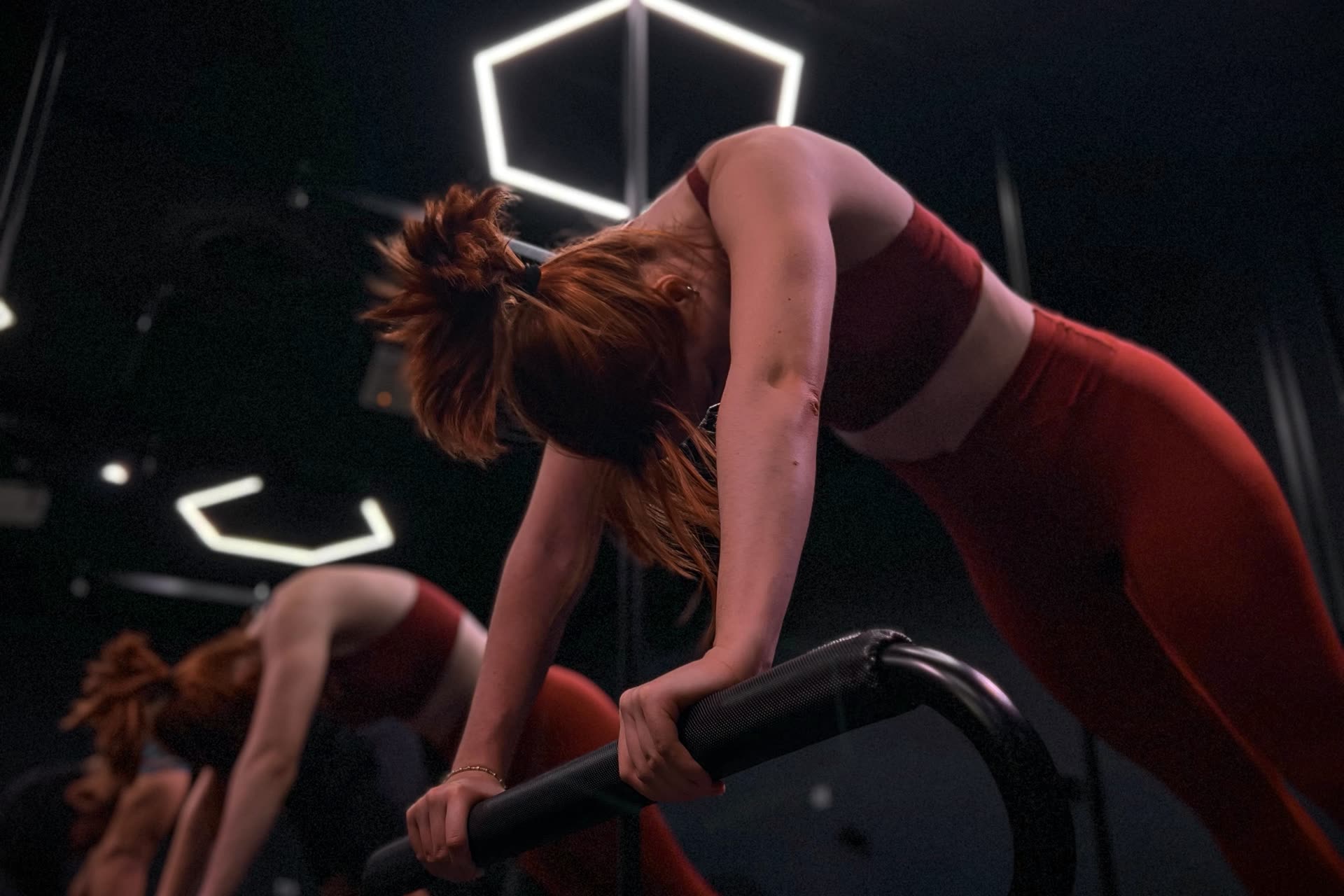
Reformer Pilates has gone from physio rooms and dancers' studios to one of the most in-demand classes in London — and for good reason. It builds the kind of deep, functional strength that makes everything else feel better: running, lifting, spinning, even nine hours at a desk. If you're in East London, this guide covers what the reformer actually is, what your first class feels like, and how to get started at Rumble Dalston — home of our dedicated Re.Former studio.
What is Reformer Pilates?
The reformer is the machine: a sliding carriage on a frame, loaded with springs, with straps and a foot bar. You push, pull, hold and glide against the spring resistance — lying, kneeling, standing — through slow, controlled movements. The springs are the genius of it: they both resist your movement and assist it, which means the same machine can humble a seasoned athlete and gently support a complete beginner.
Compared with mat Pilates, the reformer adds adjustable resistance and far more exercise variety; compared with weights, it trains control, alignment and the deep stabilising muscles that conventional lifting tends to skip.
What Reformer Pilates is actually good for
- Core strength that transfers: not crunch-strength — the deep, bracing strength that protects your back in daily life and sport.
- Posture: the reformer is ruthless and brilliant at exposing imbalances between your left and right side, then fixing them.
- Mobility with control: you move joints through full ranges under light load — the most productive kind of flexibility work.
- Low-impact strength: joint-friendly resistance training, which is why physios love it for people returning from injury (check with yours first).
- Balance for high-intensity training: if your week is built on HIIT or spin, the reformer is the recovery-strength counterweight your programme is probably missing.
What a Re.Former class at Dalston looks like
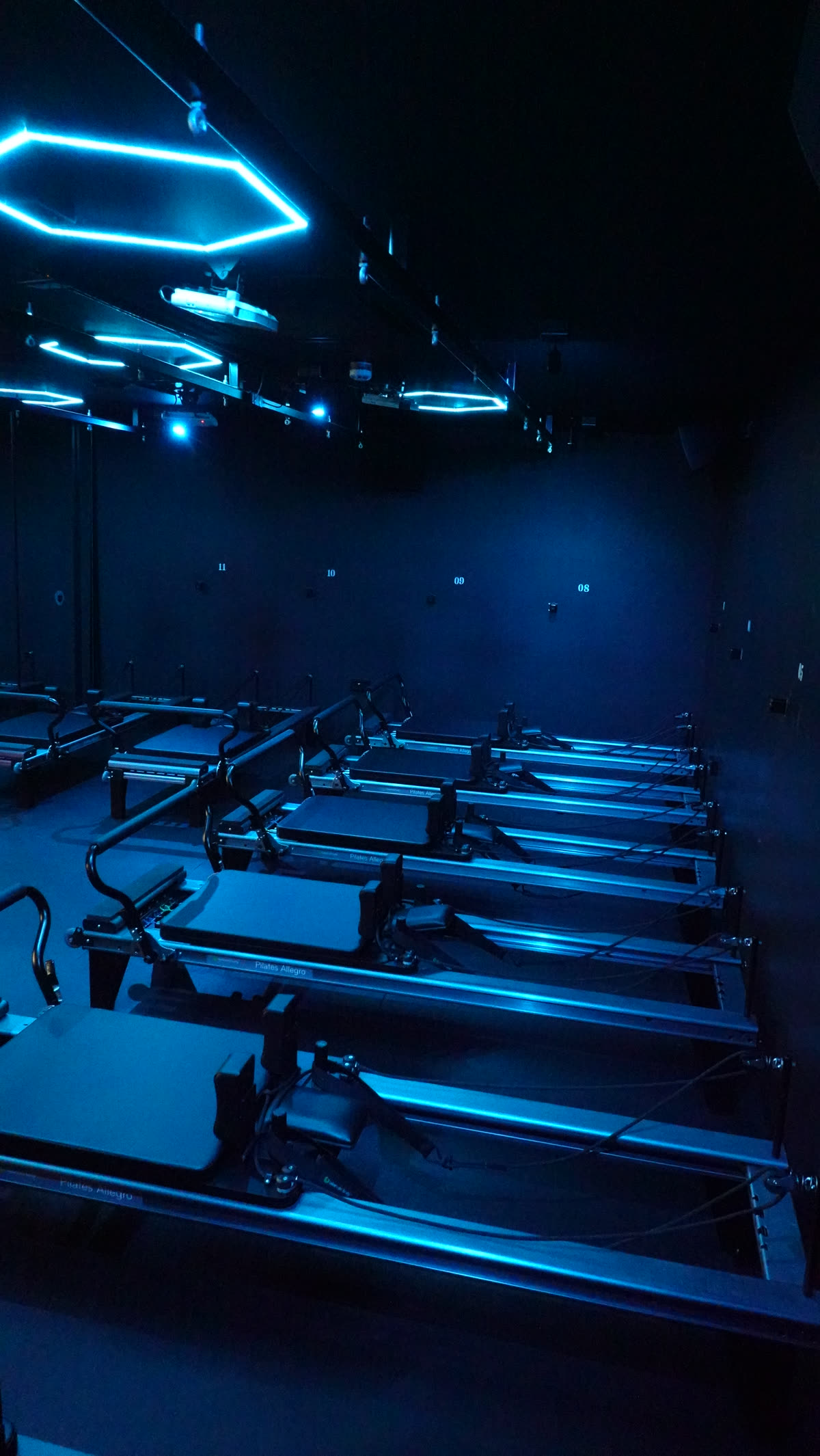
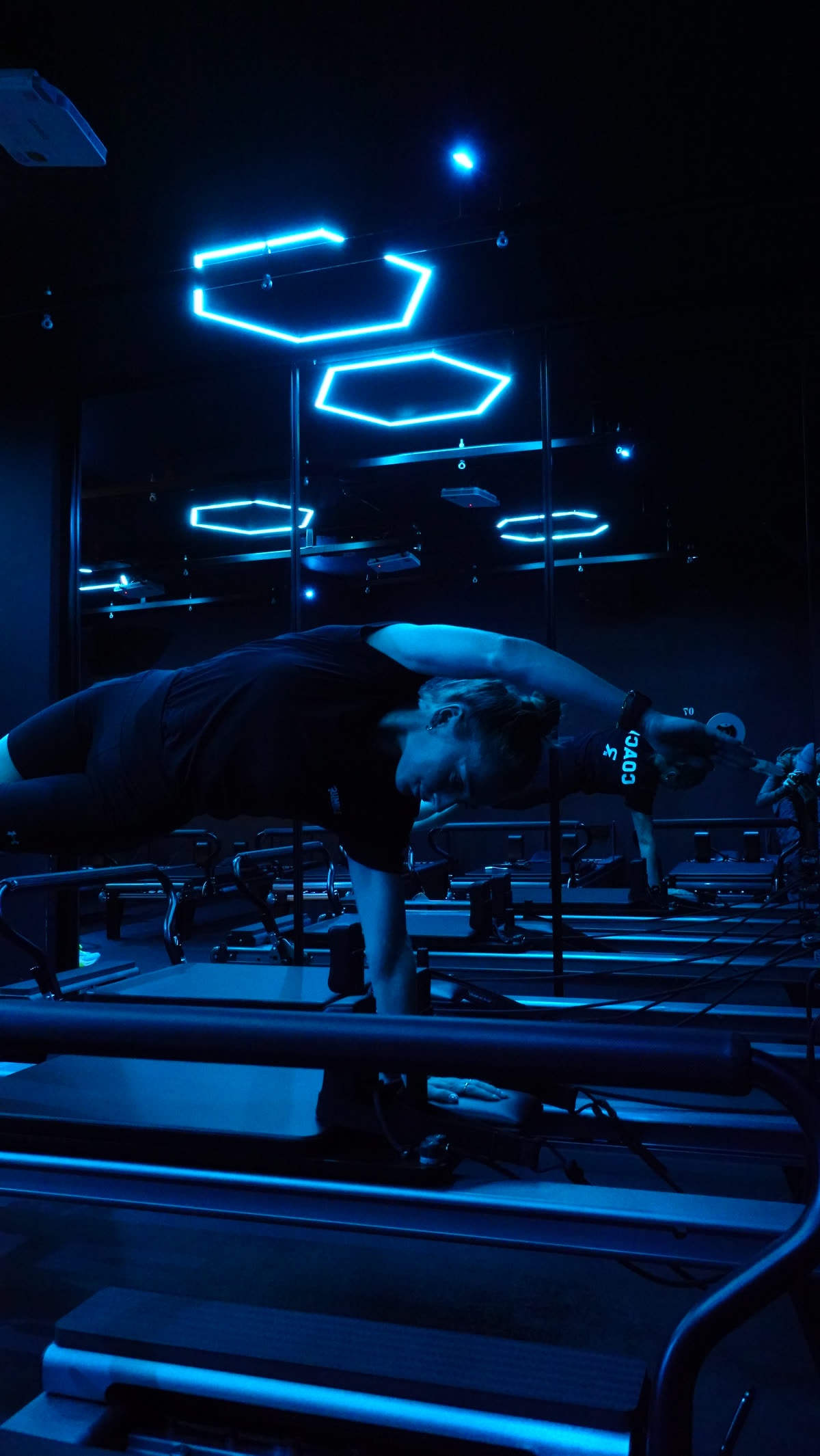
Classes are progressive 50-minute sessions for all levels in a dedicated reformer studio — every person on their own machine, every movement coached. A typical session moves through footwork and leg springs to warm up the lower body, into core and upper-body series with the straps, and finishes with deeper mobility work. Classes come in three types (Foundation, All-Level and Intermediate/Advanced), so you can start at the level that suits you, and the coach sets spring tensions per person.
Expect to shake in muscles you didn't know existed.
It looks slow and gentle from the outside. It feels anything but from the carriage.
Why Dalston?
Re.Former is exclusive to our Dalston studio — the only Rumble site with a reformer floor. You'll find us on the ground floor of Labyrinth Tower in Dalston Square, E8 3GP, two minutes from Dalston Junction Overground (Dalston Kingsland is a short walk too).
Dalston is also our most complete site — alongside the reformer studio there's the full Re.HIIT circuit, treadmill classes, spin, our yoga and Pilates studio, and the Re.Fuel cafe for afterwards. Full details on the Rumble Dalston page.
Your first class: practical answers
Weighing Reformer against our other classes? Our guide to fitness classes for beginners in London explains which class to try first and what a first visit involves.
Reformer vs mat Pilates vs yoga
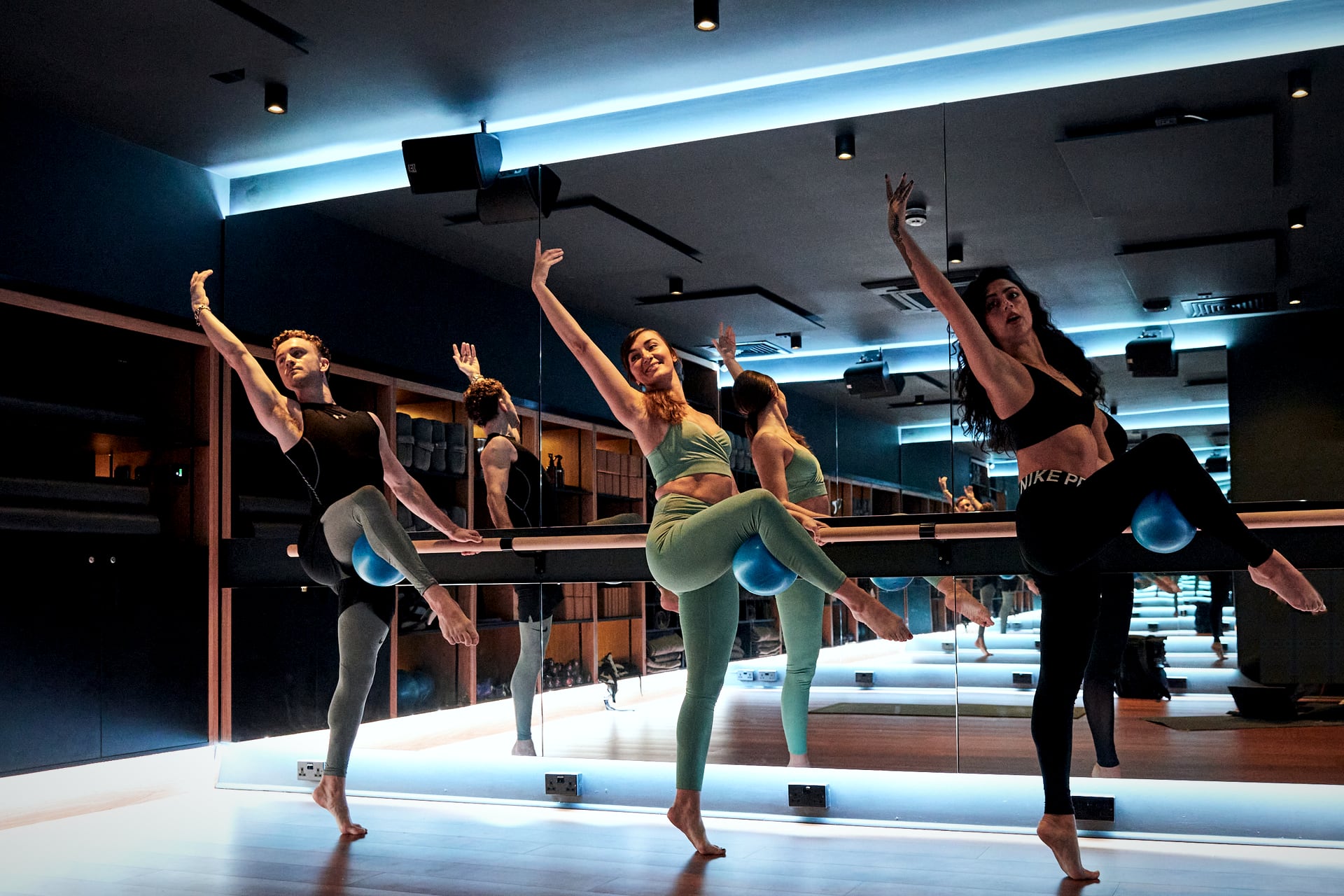
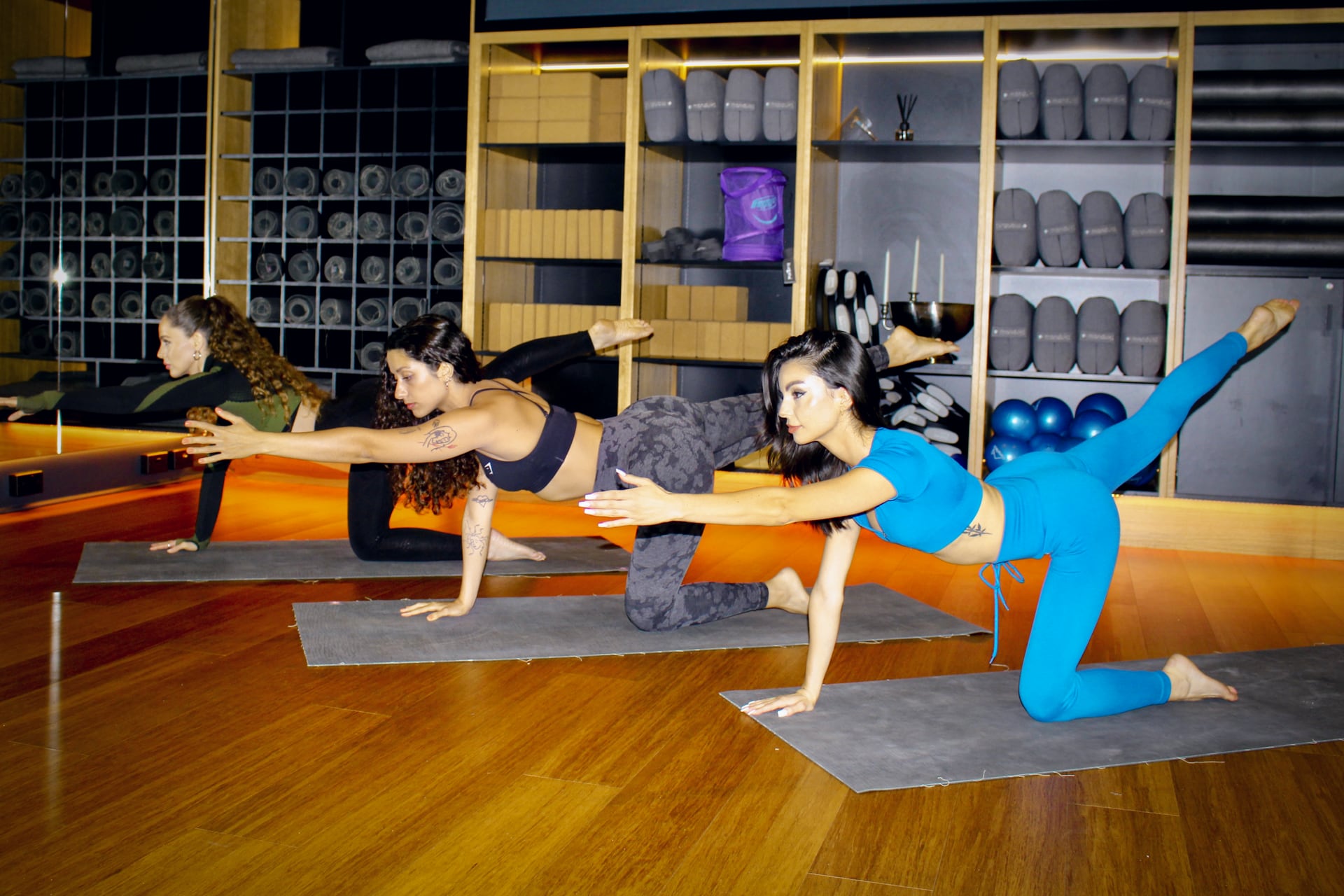
Mat Pilates uses your body weight plus small props (bands, balls and rings) to challenge stability and build strength. The reformer adds springs: more range, more load options, faster strength gains. Yoga overlaps on mobility and control but is its own practice — and at Rumble it happens in our one-of-a-kind humming Re.Center studio. They stack beautifully: reformer for strength, yoga for range and downshifting. Curious about barre too? Our barre for beginners guide compares it with mat and Reformer Pilates.
How to book
Classes run throughout the day at Dalston — book a Re.Former session here. The Discover offer is three classes for £45 (new clients only), and unlimited plans that include the Re.Former studio start at £159/month — see current memberships. Class sizes are capped by the number of reformer beds, so peak-time slots genuinely do sell out: book ahead for evenings.
The short version? If you do one new thing for your training this year, make it a fortnight of Reformer Pilates. Read more about Re.Former or book your first class at Dalston.
More from the R2 Journal
Join our newsletter
Training tips, recipes and stories from the studios — straight to your inbox.