
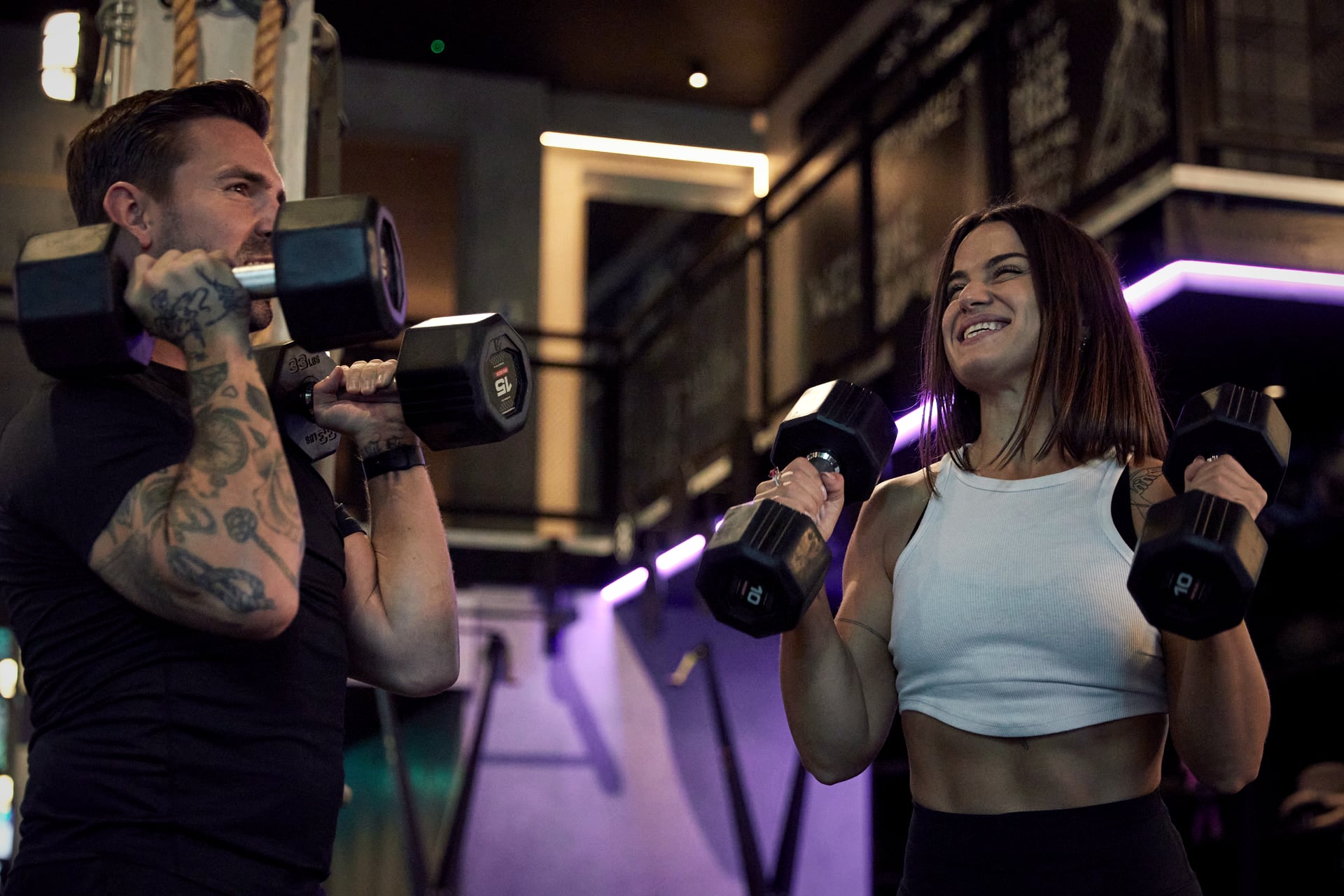
Strength training for women in London at Rumble, a woman-owned gym where 80% of clients are women. How to start, a beginner week and what it costs.
Plenty of women want to get stronger and never quite start. Often it isn’t time that gets in the way, but not knowing where to begin, what to do in a weights area, or whether a class will suit a complete beginner.
This guide is for that first step. It covers what the NHS guideline asks for, the worries that put people off, five ways to strength train in London, what to look for in a class and a simple two-session week at our Dalston and Fitzrovia studios.
What the guideline asks for, and what counts as strength work
Start with the guideline rather than the trends. The NHS says adults should “do strengthening activities that work all the major muscle groups (legs, hips, back, abdomen, chest, shoulders and arms) on at least 2 days a week”, in its physical activity guidelines for adults. The UK Chief Medical Officers make the same recommendation in their physical activity guidelines, updated in July 2026, and add that “any strengthening activity is better than none”. The guideline is the same for women and men.
What counts as strength work is broader than lifting heavy weights. Among the NHS’s examples of muscle-strengthening activities are lifting weights, working with resistance bands, bodyweight exercises such as push-ups and sit-ups, yoga and Pilates. You don’t need a barbell, a powerlifting gym or any experience to begin.
So for most women the real question is how to start, not whether to: who teaches you the technique, what a week looks like, what it costs and whether the classes are mixed. Our own answer is the coached Re.HIIT circuit at Dalston and Fitzrovia, and we’ll be honest below about what it is and isn’t as strength training.
The worries that stop women starting, answered
Here are five common worries, with an honest answer to each:
- “I’ll get bulky”: not from a couple of sessions a week. Two coached sessions a week is general strength and conditioning, a long way from the dedicated programme and diet that building bulk takes, so you can focus on getting stronger.
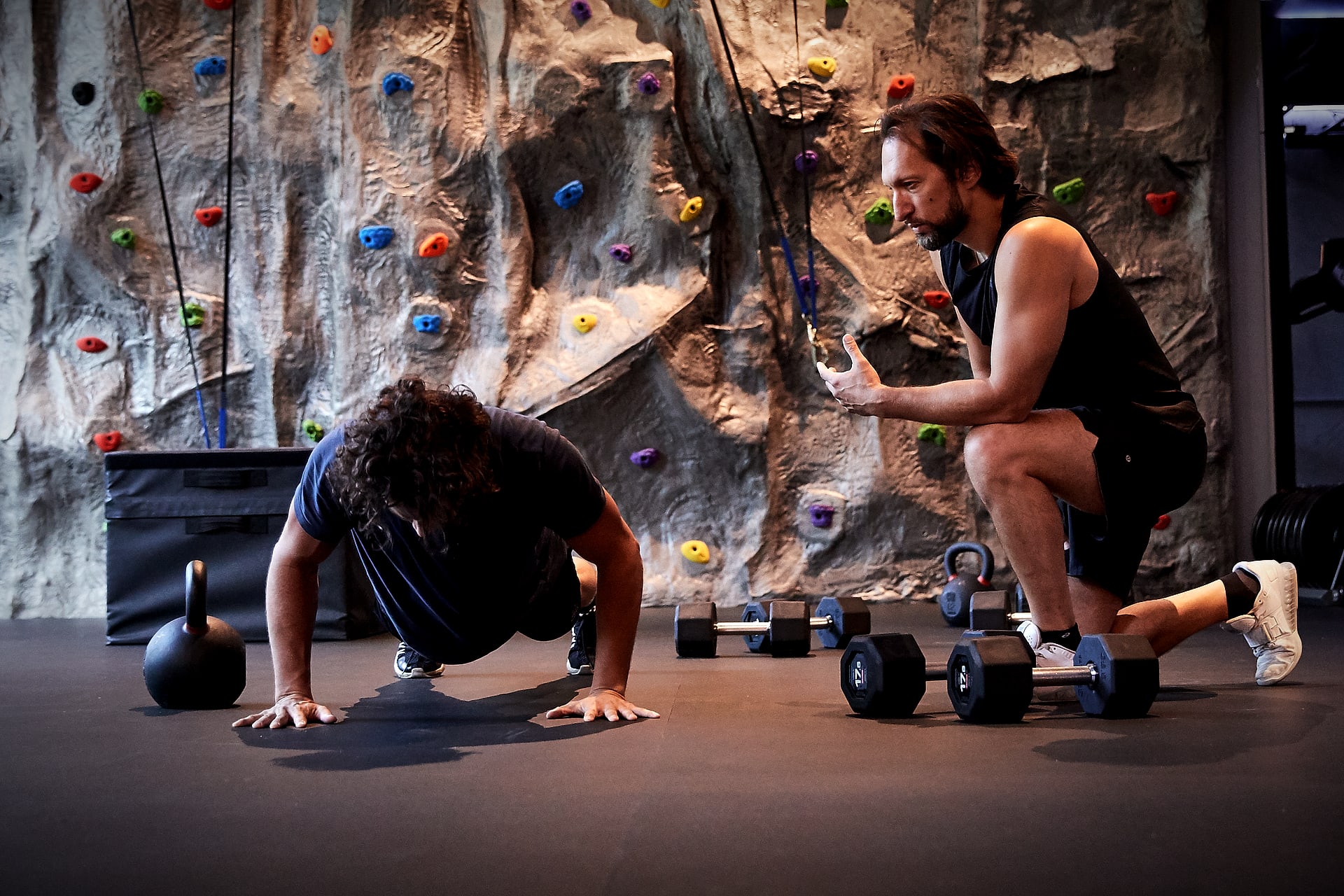
- “I don’t know the technique”: any coached format will teach it, whether that’s a personal trainer, a strength class or a coached circuit. At Rumble, the screens demonstrate every move, including the warm-up, and a trainer on the floor adapts each station to you.
- “I won’t know what to do on a weights floor”: in a coached format the session is already programmed, and a coach tells you what comes next. On our circuit, each station’s exercise is on the screen in front of you, and off-peak sessions are often quiet if you’d like a calmer room.
- “I’m not fit enough yet”: beginner-friendly classes scale every exercise to where you are now. Our circuit is open to all levels and scaled to the level you arrive at, and coaches are told who is new before the circuit starts.
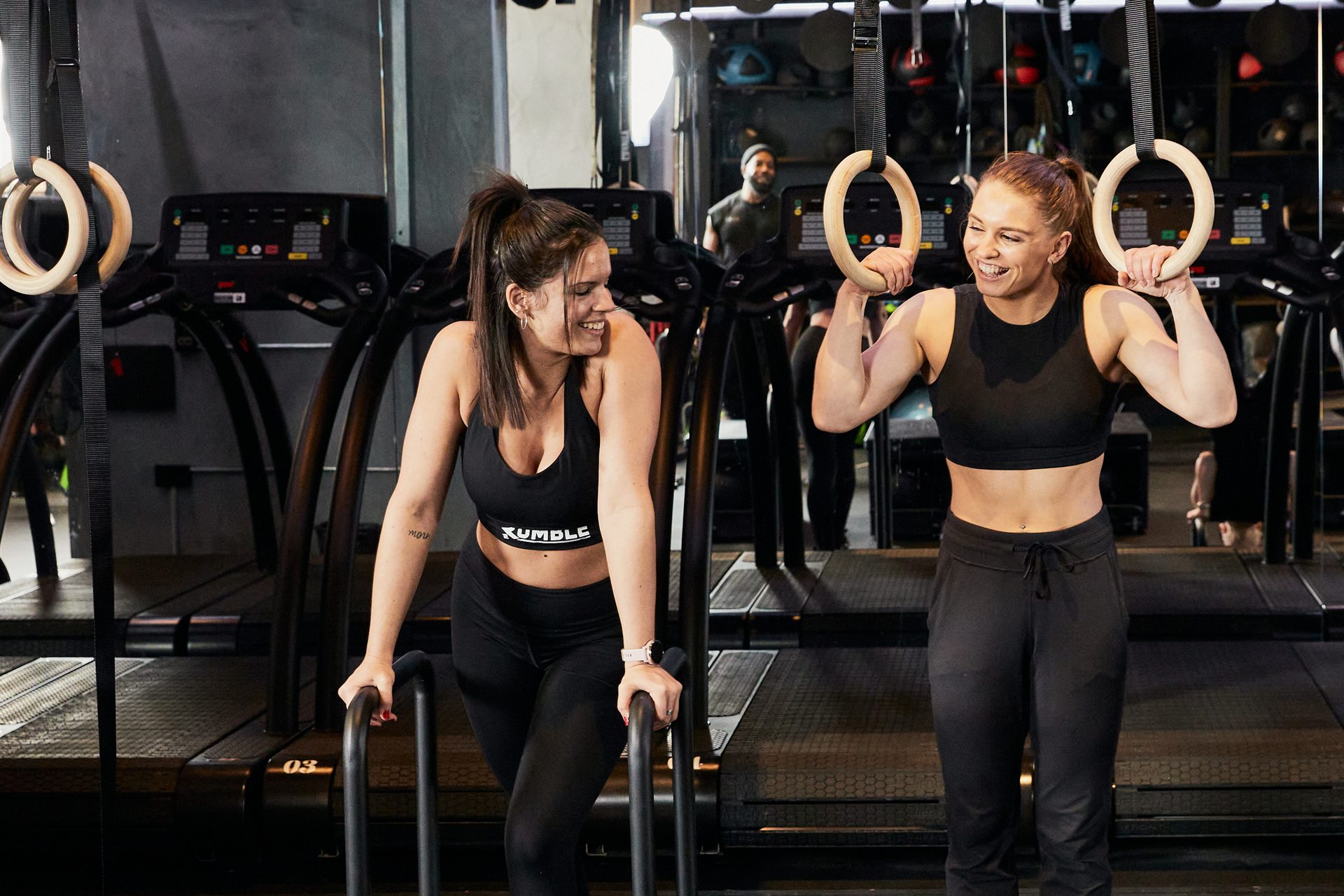
- “I’d prefer a women-only class”: every Rumble class is mixed, with no women-only sessions. But Rumble is woman-owned, and 80% of our clients are women, because they see it as a safe place to train.
Strength training classes in London: five formats compared
The right format depends on how you like to learn. Here are five side by side, with our own prices as of October 2026:
Choose by how you like to train, not by promised results. One-to-one if you want to learn the lifts first, a fixed class if you like a set time, a women-only room if that matters to you, and the circuit if you want coaching on a schedule that starts every 10 minutes.
What to look for in a beginner strength class
Whichever format you pick, a good beginner strength class gets a few things right. Look for these:
- Technique coaching: someone should demonstrate each movement and watch your form, especially in your first few sessions.
- A coach who adjusts the weight: if a load is too heavy or too light, someone should notice and change it.
- Every exercise scaled: ask whether each exercise has an easier and a harder version, so a beginner and a regular can train side by side.
- The room you want: mixed or women-only. Decide which you’d rather train in.
- A price you’ll use: compare options on the sessions you’ll actually do each week, not the headline rate.
- A time you can keep: pick a timetable you can get to week after week, not just in the first month.
Here’s how our own circuit measures up against that list, starting with what kind of training it really is.
How the coached circuit works as strength training
Let’s be straight about the format first. Re.HIIT is a 40-minute HIIT circuit that combines “resistance training, cardiovascular conditioning and functional strength work”, built from short, intense intervals of compound movements, weights, functional equipment and bodyweight exercises. So every session mixes cardio conditioning with the strength work. If you want more lifting and less cardio, Re.Run and personal training, both above, are the closer fit.
The week is split into Build and Burn days. Build days emphasise muscular strength and Burn days muscular endurance, a split we explain in more detail in why our split workouts work. The Build days are Monday and Thursday (upper focus), Wednesday (abs and glutes) and Saturday (full body).
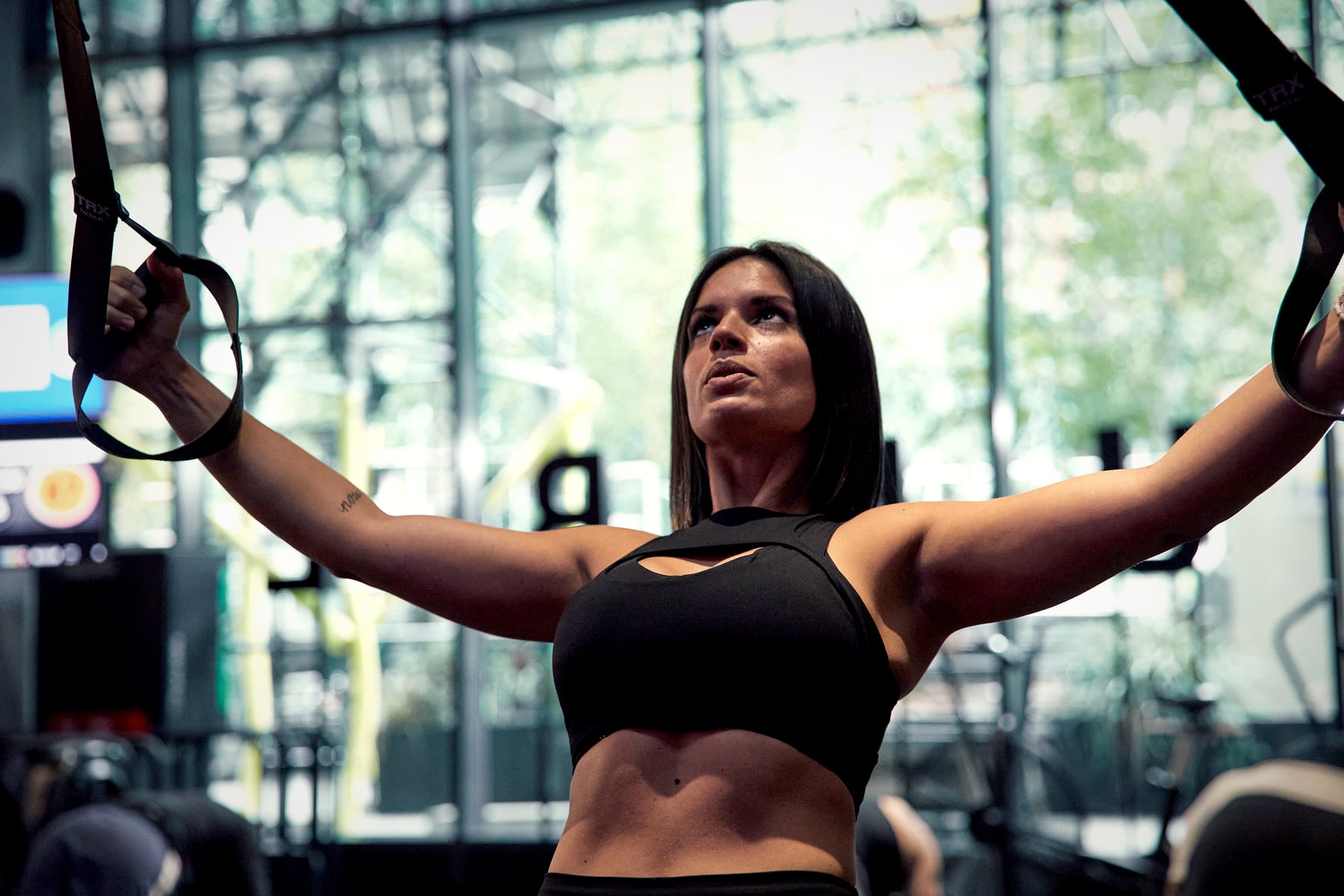
Each session is 40 minutes of work plus a warm-up, circuits start every 10 minutes, and the circuit runs the same way at both studios. What makes it a good first step into strength training is the coaching. There’s a new programme every day, with a trainer on the floor adapting each station to you, which makes it pretty much PT on demand for a fraction of the price.
In practice, the coach adjusts the station when you need it, handing you a lighter or heavier weight or swapping in an easier or harder version of a move. Everyone follows the same programme, each at their own level. The weekly focus is on the Re.HIIT class page.
A two-session beginner strength week
Two sessions a week is a simple rhythm to start with. Here’s one way to set that up on the circuit:
Strength training for women in London: Dalston or Fitzrovia
Both studios run the same circuit, so pick the one you’ll get to most easily.
Rumble Dalston is at Ground Floor, Labyrinth Tower, Dalston Square, E8 3GP. Dalston Junction Overground is 2 minutes away, Dalston Kingsland 6, and buses 30, 38, 56, 67, 76, 149, 242 and 243 stop nearby. As well as the circuit, Dalston runs Re.Run, Re.Sculpt, Reformer Pilates, spin and yoga.
Rumble Fitzrovia is at 101-105 New Cavendish Street, W1W 6XH, 8 minutes’ walk from Great Portland Street and Goodge Street, 10 from Warren Street and 11 from Oxford Circus. It runs the circuit and one-to-one personal training, handy for a West End lunch break.
Fitzrovia also has our £49 Off-Peak plan for the quieter hours of the day, with a Dalston plan coming soon. A calmer room means more coach attention for each person, which is worth knowing if you’re new to lifting. We explain how it works in our guide to training off-peak in London.
Your first strength session: what happens
Here’s what to expect from your first visit, at either studio:

What strength training costs at Rumble (as of October 2026)
These are our prices as of October 2026:
Every option, including All Unlimited at £199 a month for every class and circuit at both studios, is on the memberships page.
Strength training for women in London: quick answers
Book your first session at Rumble
New to Rumble? The Discover offer is three classes of your choice for £45, for new clients only, used within a month at either studio. Book at Dalston or book at Fitzrovia, and check the weekly focus on the circuit page to pick your Build days.
Rather learn the lifts one-to-one first? Request a free personal training consultation. It’s a phone call with a coach, who will talk through your goals and the studio that suits you.
More from the R2 Journal



Join our newsletter
Training tips, recipes and stories from the studios — straight to your inbox.