

What circuit training classes involve, how a circuit differs from HIIT, and what happens in a 40-minute coached Re.HIIT circuit in London.
Circuit training is one of the simplest ways to work your whole body in one session, and one of the most misunderstood. Some people picture a school sports hall, and plenty assume it’s just another name for HIIT.
We explain it using the Re.HIIT circuit we run at Rumble Dalston and Rumble Fitzrovia, where a new 40-minute circuit starts every 10 minutes. We also cover how often to train, what the UK guidelines say and what circuit training classes cost at Rumble.
What is circuit training?
Circuit training is a workout made of several exercises, called stations, done one after another with little rest between them and then repeated for several rounds. Because the stations can mix strength and cardio work for different muscle groups, one session can cover the whole body.
Three things make a workout a circuit:
- Stations in sequence: a set of different exercises, each with its own equipment or space, worked in a fixed order.
- Little rest: you move from one station to the next with only a short break, so your heart rate stays up between exercises.
- Repeated rounds: when you reach the end of the sequence, you go round again.
In a circuit training class, the coach sets the stations, the order and the timing, so all you have to do is follow the sequence. That’s the difference from a gym floor, where you design the session yourself.
Circuit training vs HIIT: what’s the difference?
Circuit training and HIIT overlap, but they aren’t the same thing. Circuit training is a format, a series of exercises worked in sequence with little rest. HIIT, or high-intensity interval training, is an intensity pattern, with short bursts of hard effort broken up by recovery.
So a circuit can be gentle, such as a rehab circuit of light exercises. And HIIT can happen on a single machine: a treadmill or bike interval class is HIIT, but it isn’t a circuit.
Re.HIIT is both. It’s a circuit of cardio and strength stations worked in short, intense intervals, so you get the variety of a circuit and the intensity of HIIT in one 40-minute session. If you’re weighing up formats across the city, our guide to the best HIIT classes in London sets out what to look for.
How a Re.HIIT circuit class works
A Re.HIIT circuit is 40 minutes of work plus a warm-up, and a new circuit starts every 10 minutes throughout the day. There’s no fixed class time, so there’s no such thing as being late. Walk in, and a coach will get you going within 10 minutes of arriving. At peak times, such as before work, at lunchtime and after work, it’s better to book your start in advance on the live timetable or in the Rumble app.
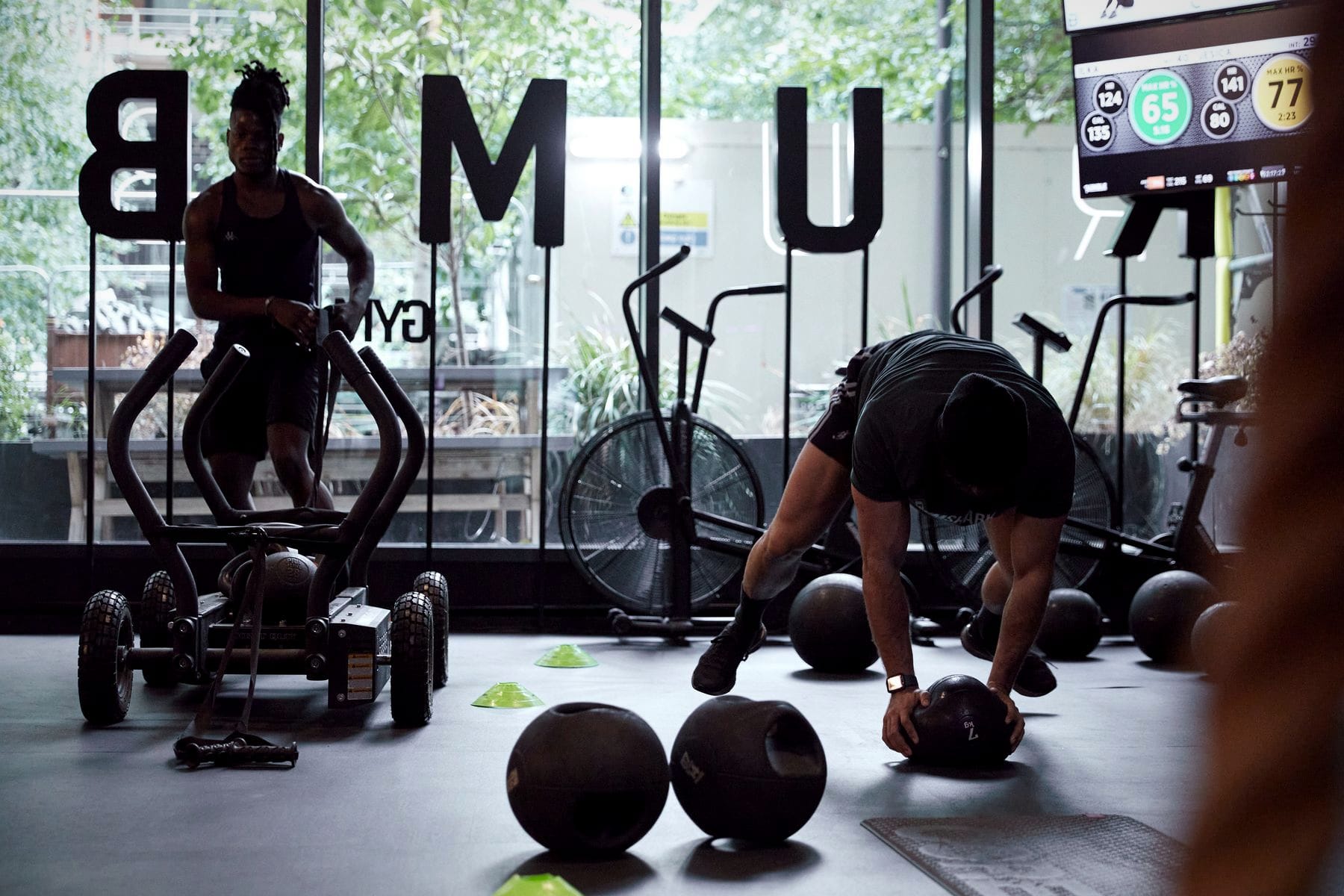
The screens demonstrate every move, including the warm-up, and guide you through all the timings, so you always know what’s next and how long is left. A coach on the floor adapts each exercise to you, which makes the circuit pretty much PT on demand for a fraction of the price.
The first circuit starts at 6:20am on weekdays and 8am at weekends. The last circuit starts at 8:20pm Monday to Thursday, 7:20pm on Fridays and 3:20pm at weekends.

What you’ll do on the stations
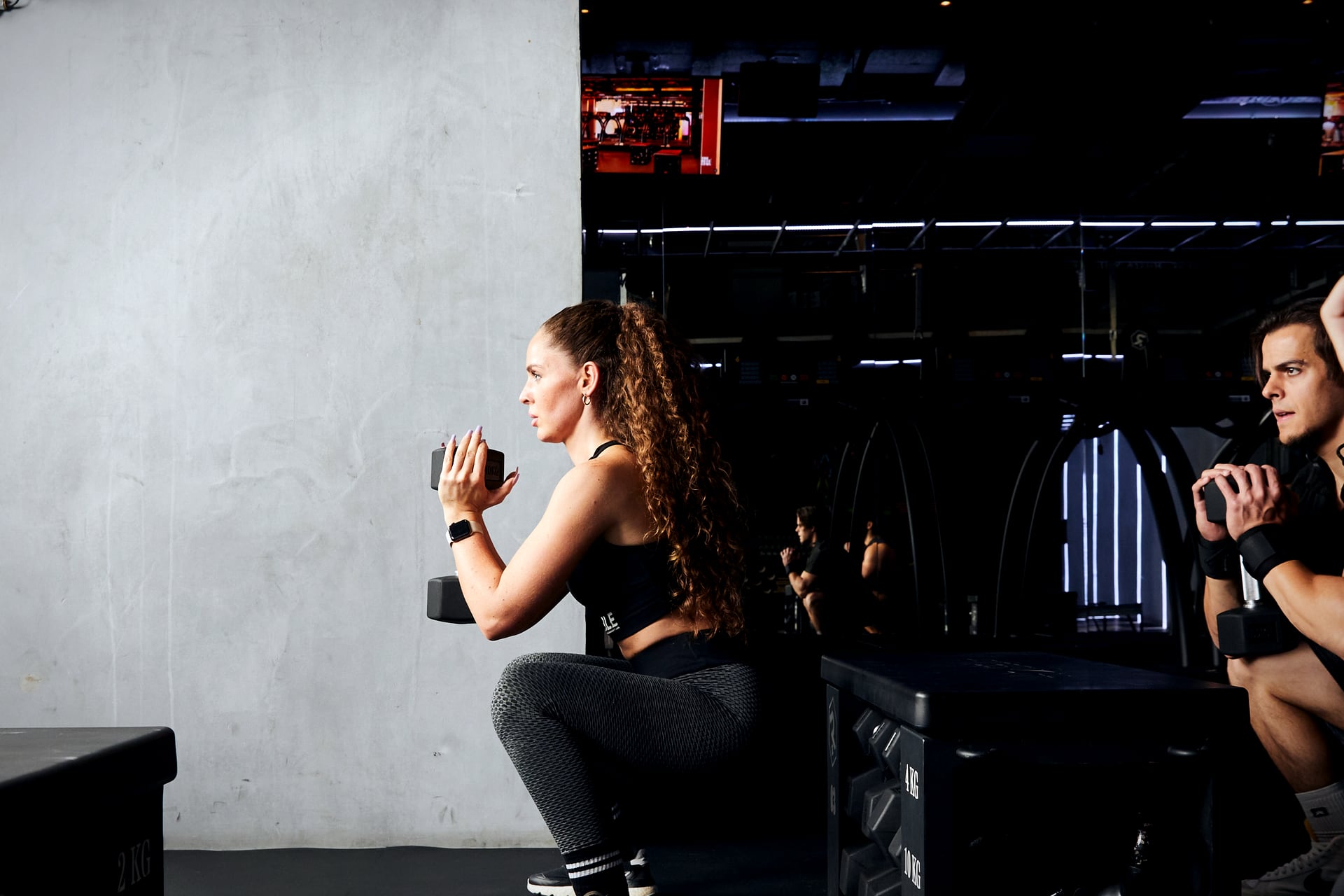
Each circuit covers mobility, resistance, cardio and conditioning. Within short, intense intervals you’ll meet compound movements, weights, functional equipment and bodyweight exercises, and the floor has everything you need, from SkiErgs and battle ropes to rowers and assault bikes.
Some stations build strength, others get your heart rate up, and the screens keep the time, so you never have to watch a clock or plan your next move.
Build days and Burn days: one circuit, seven workouts
The programme changes every day, but each day of the week has its own focus. Build days put the emphasis on muscular strength, and Burn days on muscular endurance:
If strength is your priority, start with two Build days a week, and our guide to how the split week works shows how to add a Burn day. For more dedicated strength work at Dalston, Re.Run pairs treadmill intervals with strength work at the Fitbench in its Upper Body and Lower Body sessions, and Reformer Pilates builds strength and control.
Are circuit training classes good for beginners?
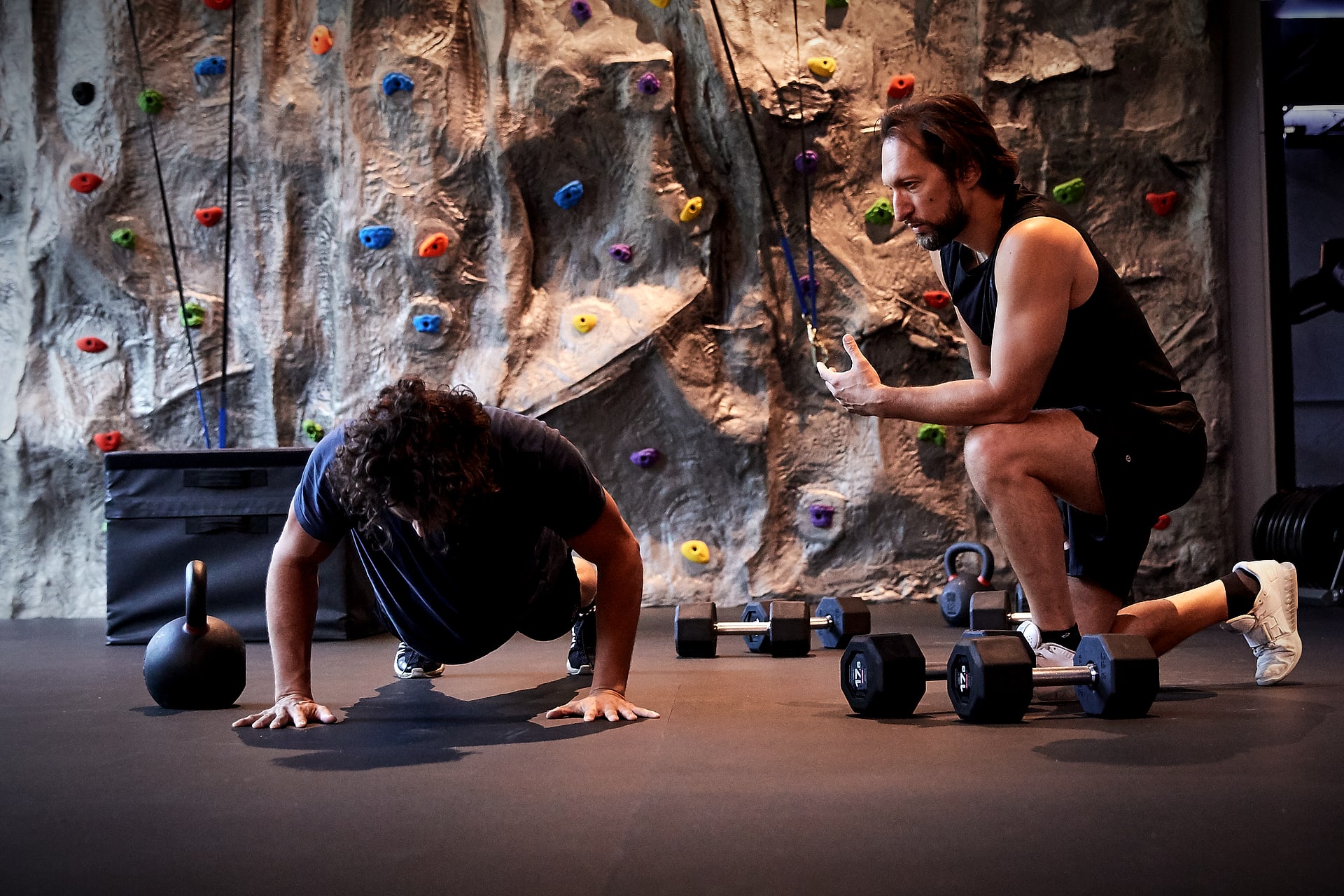
Yes. Re.HIIT is open to all levels, and the format is built for it. Every move is shown on the screens, the coach scales each station to you, and you work at your own ceiling, whether it’s your first circuit or your five-hundredth. Coaches are told who is new before you start, so someone can show you how the circuit works.
There’s very little to organise. Bring gym clothes and trainers. Towels, lockers and showers are provided. The minimum age is 16, and 16 and 17 year olds need written consent from a parent or guardian. If you’re pregnant, we ask for a note from your doctor before you join the circuit. Let the team know when you check in, so your coach can adapt the session. Our FAQ has the details.
Worried about bulking up? A few circuits a week won’t make you bulky. They build strength and fitness, and our guide to strength training for women covers what to expect when you start lifting.

How often to do circuit training: what the UK guidelines say
The UK Chief Medical Officers’ physical activity guidelines (2019, updated in July 2026) ask adults to build up at least 150 minutes of moderate intensity activity a week, or 75 minutes of vigorous intensity activity, or a combination of both, and to do muscle strengthening activities on at least two days a week. Any activity is better than none.
The NHS guidelines for adults aged 19 to 64 (page reviewed 22 May 2024) list circuit training among their examples of very vigorous activity, and say strengthening activities should work all the major muscle groups, meaning the legs, hips, back, abdomen, chest, shoulders and arms. A circuit with resistance stations that work those muscles hard enough that you need a short rest before repeating them can count towards your strengthening days.
For most people, two or three circuits a week with a rest day between them is a sensible start. Mix a Build day and a Burn day, then add a third session when you’re ready.
Where to find circuit training classes in London
Rumble runs the Re.HIIT circuit at both its London studios, with the same 40-minute format and a new circuit every 10 minutes at each.
Circuit classes in Fitzrovia run at 101-105 New Cavendish Street, W1W 6XH, a short walk from Great Portland Street and Warren Street and around ten minutes on foot from Oxford Circus. The studio is built around the circuit and one-to-one personal training.
Rumble Dalston is on the ground floor of Labyrinth Tower, Dalston Square, E8 3GP, moments from Dalston Junction and Dalston Kingsland. Alongside the circuit, it runs Re.Run treadmill classes, Reformer Pilates, spin, barre, yoga and mat Pilates, so you can pair a circuit with a specialty class in the same building.
The circuit timetable shows every start time at both studios.
Circuit training classes: your questions answered
What circuit training classes cost at Rumble
New to Rumble? The Discover offer is three classes of your choice for £45, for new clients only, booked within one month of purchase, at either studio. After that, unlimited monthly memberships start from £49. Prices as of October 2026:
Every option is on the memberships page. Ready to try it? Book your first circuit, or just walk in.
More from the R2 Journal





Join our newsletter
Training tips, recipes and stories from the studios — straight to your inbox.